
Let's name what's actually happening
Your partner sees a vibrator and hears one thing: "You're not enough." That's not logic. That's fear. And it's so common that I'd venture it's one of the top three friction points in otherwise solid relationships. The good news: it's completely solvable. The better news: a lemon vibrator, approached correctly, can actually deepen intimacy instead of threatening it.
But first, we need to get real about why they're resistant. It's almost never about the toy itself.
Why partners resist (and why it has nothing to do with the vibrator)
Most partner resistance falls into three buckets. Recognizing which one applies to your situation changes everything about how you move forward.
The inadequacy bucket. Your partner equates your pleasure with their competence. If you need a vibrator, they've failed. This is ego, sure, but it's ego wrapped in real insecurity. They've internalized the cultural message that a "real" partner should be able to satisfy you entirely. That lemon vibrator feels like a performance review they're failing.
The abandonment bucket. They worry that introducing toys means you'll prefer them to partnered sex. That vibrators are a gateway to less intimacy, not more. The unspoken fear: "If you can get what you need from a toy, why do you need me?"
The unfamiliar bucket. Your partner simply doesn't understand what a vibrator does, or they grew up in an environment where sex toys were taboo or shameful. They're not resisting you. They're resisting something that feels foreign or even wrong.
Most people sit in a mix of all three. But the conversation changes completely when you stop arguing that vibrators are "normal" and start reframing them as tools for connection.
The conversation that actually works
Don't lead with "I want to try a vibrator." That's defensive and invitation to debate. Instead, start with pleasure and partnership as the goal. Here's the opener I recommend:
"I want to feel closer to you. I've noticed sex sometimes feels rushed, or I end up not fully present. I've been thinking about ways we could slow down together and explore more. Would you be open to that conversation?"
Notice what's missing: the vibrator. Introduce the tool later, once the frame is set.
When they say yes (or even "maybe"), continue: "What I'm realizing is that my body takes longer to respond than it used to, or I need different kinds of touch to fully let go. That's not about you. That's just my body. And I think if we understood that together, we'd both feel better."
Let them sit with that. Then: "I've been reading about tools that might help us explore more slowly. One of them is called a clitoral vibrator, specifically something like a lemon vibrator, because it focuses on one very concentrated area. It's not about replacing you. It's about me being more present with you. Does that land?"
The difference here is profound. You're not asking permission to fix yourself. You're inviting them into solving a shared problem.
The introduction that works (step by step)
If they've said yes, don't immediately pull out a lemon vibrator during sex. That's ambush intimacy, and it triggers all three fear buckets at once.
Instead:
Step 1: Non-sexual context first. Show them the toy when you're not in bed. Put it in their hand. Let them feel the weight, see it's not intimidating, understand it's a tool like any other. Many vibrators look more like a piece of design than anything medical. The lemon vibrator, for example, has actual aesthetic appeal. Let that matter.
Step 2: Explain the mechanism. "This one uses suction, not vibration. It's different from what you might imagine. It focuses stimulation really narrowly, which means I can stay present with you instead of getting stuck in my head chasing sensation." Be specific. Mystery equals threat.
Step 3: Trial without performance pressure. "I'd like to use this while we're intimate, but not as the whole event. Maybe during foreplay. Or afterward. Just so we can see how it feels for both of us." Remove the expectation that this is now the script for every encounter.
Step 4: Start with them out of the room. I know that sounds counterintuitive, but many partners feel less threatened if they're not watching you use it initially. Use it solo once or twice so you know exactly how it works and how your body responds. You can tell them: "I want to make sure I know how this works before we try it together."
Step 5: Then invite them in. "I've tried this, and it actually feels really good. I'd like to try it while we're together next time. You don't have to do anything different. Just be present." Their role in step one is witnessing, not performing.
What to do if they still resist after conversation
Sometimes, even a great conversation hits a wall. Your partner says no. Or yes but then shows discomfort when it actually happens. Here's what I tell couples:
Resistance after good communication usually means one of two things. Either there's something deeper (shame, past trauma, religious conditioning) that needs unpacking with a therapist. Or your partner genuinely needs more time. Both are valid.
If it's time, don't push. Build other forms of intimacy. Longer foreplay. Different positions. More eye contact. More conversation during sex. Sometimes the thing your partner needs is to feel secure in other ways first. A lemon vibrator isn't going anywhere.
If it's trauma or deep shame, get a couples therapist who specializes in sexual health. This isn't a vibrator problem. It's a foundation problem, and you both deserve support in addressing it.
Why lemon vibrators specifically work for this conversation
There are reasons I keep pointing toward lemon vibrators specifically in this dynamic. First, the design itself is approachable. It's not overtly medical or intimidating. It's literally fruit-shaped. That aesthetic softens the threat.
Second, the suction mechanism is conceptually different from what many partners imagine when they think "vibrator." Most people's anxiety is built on outdated ideas of vibrators as harsh, overwhelming, replacement-level. A lemon sucker works gently. You can control the intensity precisely. It actually invites slower, more connected sex, not faster disconnected sex. That reframes the entire conversation.
Third, clitoral vibrators like the lemon focus stimulation so specifically that they're genuinely tools for your own sensation, not performance aids. That's harder for a threatened partner to misinterpret as a replacement.
The long game: rebuilding pleasure as a team
Once your partner is on board (or moving toward being on board), the real work is reframing sex together. You're not adding a toy. You're saying: "I want us to explore pleasure in a new way." That's a team conversation.
Many couples who've navigated this tell me the same thing. The vibrator wasn't the breakthrough. The conversation was. Knowing they could talk about pleasure, about bodies changing, about needs shifting. That they didn't have to white-knuckle through sex anymore. That's what transforms intimacy.
Your partner's resistance isn't a refusal. It's a question. The question is: "Do you still want to find your pleasure with me?" The answer, if you do this right, is yes.
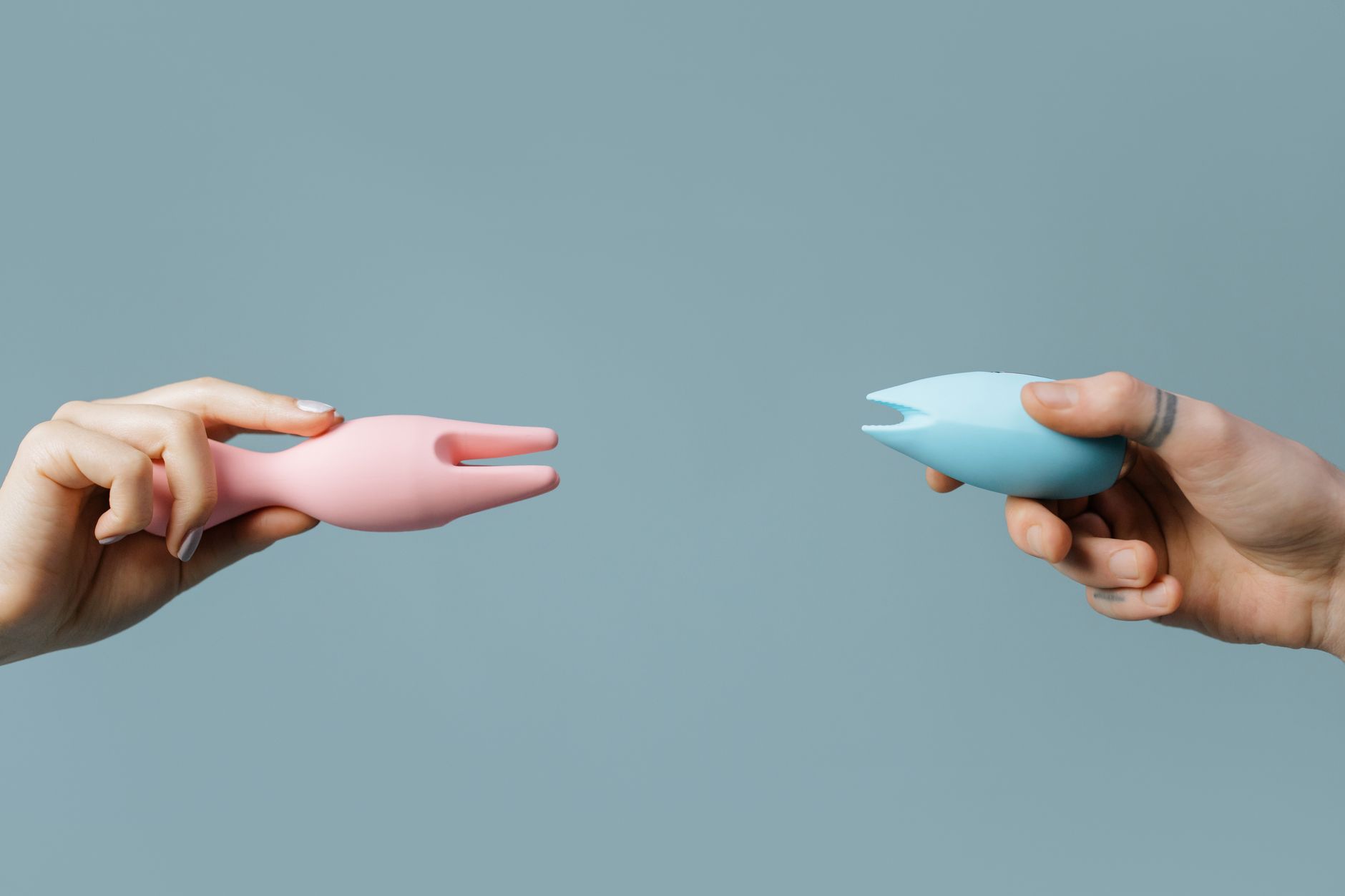
Photo by cottonbro studio on Pexels
Troubleshooting specific pushback
"I feel like I'm being replaced." Respond with: "I need you differently, not less. This helps me relax, which actually means I'm more present with you. Can we try it and see?" Then follow through. Use the vibrator during partnered sex. Make eye contact. Show them they're still the center of your attention.
"This feels emasculating." Reframe: "Your pleasure matters too. Would you like to explore what works for you separately?" Sometimes partners who've resisted toys become their biggest fans once they've tried them solo. Remove the comparative element.
"We don't need toys if we just have better sex." Agree. "Let's have better sex. Part of that might be understanding my body better. This is part of that understanding." You're not arguing against them. You're enlisting them.
"You never needed this before." True. Bodies change. Stress changes responsiveness. Medication changes things. Aging changes things. Hormonal shifts from birth control affect sensation. None of that is a failure. It's just biology. And it's information you can work with together.
Common questions about partner resistance and lemon vibrators
Can I use a lemon vibrator without telling my partner?
Technically yes. Practically, no. If they discover it, the shame and secrecy compound the threat. If they don't, you're building intimacy on a lie. Neither serves you long-term. The conversation is always worth having, even if it takes multiple attempts.
What if my partner wants to use the lemon vibrator on me, but I want to use it myself?
Both are valid. The best scenario is both: solo use so you understand your own sensation, and partnered use so they can be involved. You control the intensity when you use it. They can watch and learn what you like. That's actually incredibly bonding for many couples.
Should I introduce the lemon vibrator before or after we've worked on other intimacy issues?
It depends on the issue. If you have major communication problems or unresolved resentment, fix that first. A vibrator won't heal infidelity or contempt. But if the issue is specifically around sensation, responsiveness, or pleasure, the vibrator can actually be part of the healing conversation. It's a tool that says: "I'm invested in us figuring this out."
How do I know if my partner's resistance is a dealbreaker?
That's a longer conversation, and honestly, one worth having with a therapist individually first. But here's a useful question: Is your partner willing to have the conversation, even if the answer is "not yet"? Willingness to engage is different from willingness to say yes immediately. Respect the timeline, but also protect your own needs. You deserve pleasure, with or without a partner who's ready.
Can we use a lemon vibrator as a couple if my partner has performance anxiety?
Absolutely. In fact, it can help. When performance anxiety is high, the pressure to "do it all" is unbearable. A tool that shifts the focus to sensation and presence instead of performance can be a relief for both of you. But frame it that way: "This takes pressure off both of us. We can just be together."
What if my partner uses the lemon vibrator on themselves and now I feel left out?
That's actually great information. It means they've moved past the threat. The next step is mutual exploration. Offer to use it together, or to use it on each other. The vibrator has opened a door. Walk through it together.
The actual plot twist
Here's what happens with couples I work with: about 60% of partners who've resisted toys initially become enthusiastic once they understand them. They like the ritual. They like watching their partner let go. They like the permission it gives them to slow down and be present. The vibrator becomes less about the tool and more about what it represents: "We're still figuring this out. Together."
That's worth the conversation. That's worth the patience. And yeah, that's worth the lemon vibrator.
If you're stuck in this dynamic and want a roadmap beyond what's here, reach out. This is exactly the kind of friction that shifts in the right conversation.