The honest conversation nobody's having
Here's the thing. Hormonal birth control is one of the most reliable ways to prevent pregnancy, manage periods, and reduce painful periods. It also, very regularly, dampens arousal and makes orgasms harder to reach or less intense. Both things are true at the same time, and pretending otherwise doesn't help anyone.
About 40 percent of people on hormonal contraception report changes in sexual desire or orgasm quality. That's not a rare side effect. That's a normal consequence of how these medications work on your brain and body. And if you've been told that it's all in your head, or that you just need to relax more, or that you should accept it as the trade-off, I want to be really clear: that's unhelpful advice.
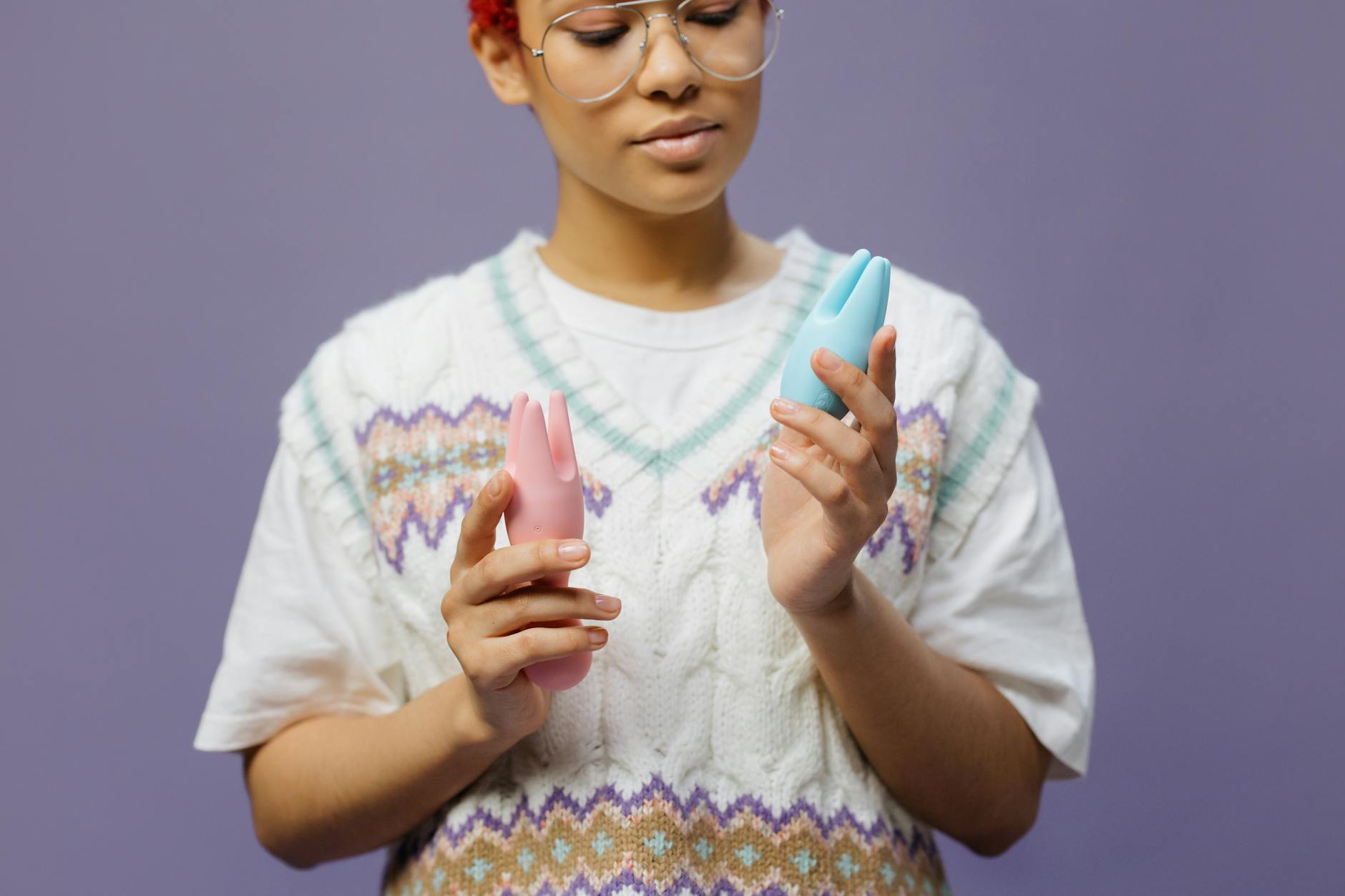
There are concrete, physical strategies that work. Lemon clitoral vibrators, specifically suction-based toys like the Lem, have a different mechanism than traditional vibrators, and for people on hormonal birth control, that difference is often game-changing.
Why hormonal birth control changes orgasm
Let me walk through the physiology, because it matters.
Hormonal contraceptives (the pill, the patch, the ring, the shot) work by maintaining stable, artificially controlled hormone levels. This prevents ovulation. But those hormones don't just control ovulation. Estrogen and progestin affect blood flow to the genitals, the thickness of genital tissue, natural lubrication, and the way your nervous system responds to touch. When you're on birth control, all of these are dampened slightly. For most people, it's subtle. For some, it's profound.
The clitoris has about 8,000 nerve endings. Orgasm happens when those nerves fire in a coordinated sequence. Traditional vibration stimulates by moving back and forth at high frequency, which works when tissues are plump and blood flow is robust. When you're on hormonal birth control, genital tissue is thinner and blood flow is reduced. Traditional vibration can feel less effective. It might even feel uncomfortable or numb.
Lemon vibrators using suction technology work differently. Suction doesn't rely on friction or rapid vibration. It creates a gentle vacuum that draws tissue upward and stimulates the entire nerve cluster at once. This mechanism is less dependent on baseline blood flow and tissue thickness. For people on hormonal contraception, it often feels more direct, more accessible.
How suction works better on birth control hormones
When you're on hormonal birth control, your body is operating at a different baseline of arousal readiness. Think of it this way. A traditional vibrator needs the engine already running to work well. A suction toy can help start the engine.
Suction technology (the kind that lemon clitoral vibrators use) creates sustained pressure and gentle pulsing that engages more of the clitoral structure at once. You don't need the same level of pre-arousal to feel it. You don't need the same blood flow. You don't need the same tissue thickness. It's a fundamentally different stimulus, and for a lot of people on birth control, it bridges the gap between what their body used to feel like and what it feels like now.
I've worked with clients who tried multiple traditional vibrators with frustration, then switched to a lemon clitoral vibrator and had their first strong orgasm in months. That's not a coincidence. It's biomechanics.
The warm-up is non-negotiable
Here's where a lot of people go wrong. They assume that because suction works differently, it works without prep. It doesn't.
You still need foreplay. You still need mental space. You still need to be present. What changes is the threshold. Whereas traditional vibration might need you 80 percent of the way to arousal before it does anything useful, suction can start working at 40 percent. But you still have to get there.
When you're on hormonal birth control, budget 20 to 30 minutes. Start with touch, with partnered foreplay, with whatever gets your mind engaged. Build a mental sense of pleasure. Then introduce the lemon vibrator. Start on the lowest setting. Let the suction work. What you'll often find is that your body responds faster than it would with traditional vibration.
The other thing that changes. Natural lubrication might be reduced on hormonal birth control, so water-based lube is essential. Not because anything is wrong with you. Because the lube helps the suction seal and work properly, and it makes the experience more comfortable. This is standard, not a workaround.
What to expect in those first sessions
When you start using a lemon vibrator while on hormonal birth control, sensations might feel different than you expect. Different doesn't mean worse. It often means more direct, more focused.
The first few times, take your time. Start with pattern 1. Let your body adjust to the sensation. The pressure might feel intense or unfamiliar at first, especially if you're used to traditional vibration. That's normal. Your nervous system is learning a new type of stimulus. By the second or third session, it usually feels natural.
Some people on hormonal contraception find that suction feels almost like partnered touch. Others describe it as a deep, concentrated sensation that builds slowly. Neither of these is better or worse. They're just what lemon clitoral vibrators tend to feel like for bodies operating at lower baseline arousal levels.
One important note. If pain appears, stop. Not discomfort, not unfamiliar sensation, but actual pain. That's your signal to reset, use more lube, or check with a doctor. Hormonal birth control can sometimes increase sensitivity in unexpected ways, so listen to your body.
Combining lemon vibrators with birth control
Here's the practical stuff.
First, timing. There's no reason to avoid using a lemon clitoral vibrator at any point in your cycle or menstrual timing, whether you're on hormonal birth control or not. Hormonal contraception actually stabilizes your cycle, so there's no "low hormone phase" where it works worse. It works the same way every day.
Second, consistency. If you're noticing that hormonal birth control has dulled your pleasure, one session with a lemon vibrator isn't going to suddenly fix years of dampened arousal. But regular use often helps. Your body seems to remember how to respond. After a few weeks of regular sessions, many people report that spontaneous arousal increases, that partnered sex feels better, and that solo pleasure feels more accessible.
Third, communication. If you have a partner, let them know what's happening. Hormonal birth control affects you, not them. But it affects your shared experience. If they understand that you're using a lemon vibrator because your body needs different stimulation right now, they're less likely to take it personally or see it as rejection. Frame it as an addition, not a substitute. That's usually true anyway.
When to talk to your doctor
If hormonal birth control has genuinely destroyed your desire (not just reduced it, but made it disappear), it might be worth switching methods. Hormonal IUDs have lower systemic hormone levels. Non-hormonal contraception like copper IUDs bypasses this issue altogether. A conversation with your gynecologist or family doctor can help you figure out if your current method is right for you.
Some people benefit from adding testosterone therapy while on hormonal birth control, especially if desire is the main issue. This is not a common approach in the US, but it's becoming more standard in the UK and Australia. If desire is your primary complaint, it's worth asking about.
But if your issue is specifically orgasm difficulty or reduced intensity while desire is intact, lemon vibrators and suction technology work more reliably than switching methods. You already like your birth control. You just need to meet your body where it is now.
FAQ
Can I use a lemon vibrator on every type of hormonal birth control?
Yes. The mechanism of how suction stimulates your nervous system is independent of which hormonal contraceptive you're on. Whether you're on the pill, the patch, the ring, or the shot, the same principle applies. Tissue response is slightly dampened, and suction works better because it doesn't rely on that tissue response. That said, different methods have different strengths of hormonal effect. Some people notice a bigger difference on the pill than on the patch. If you're considering switching contraception methods, a conversation with your doctor can help you figure out which will have the gentlest effect on arousal for your specific body.
How long does it take for a lemon vibrator to help after I start using it?
Some people feel a difference in their first session. Most feel a significant difference after three or four sessions spread over a week or two. If you're looking for your spontaneous desire to return or your partnered arousal to feel normal again, that usually takes longer, maybe three to six weeks of regular solo use. Your nervous system needs time to remember what pleasure feels like at this new baseline. Patience really does pay off here.
Will using a lemon vibrator interfere with hormonal birth control or make it less effective?
No. Vibrators, lemon suction toys included, don't interact with your contraception. They're purely mechanical tools. They don't affect hormone absorption or contraceptive effectiveness in any way. You can use them whenever you want without worrying about compromising your pregnancy protection.
Can I use a lemon vibrator with my partner while on hormonal birth control?
Absolutely. Lemon clitoral vibrators can be incorporated into partnered play just as easily as into solo pleasure. If anything, the fact that suction-based toys require less pre-arousal and feel different than traditional vibration often makes partnered sessions feel more comfortable and less performance-focused. You're sharing something that works for your body right now, not struggling with a tool that doesn't. That usually feels better for everyone involved.
Does switching between lemon vibrators and traditional vibrators affect how my body responds?
Not permanently, but it might in a session. Some people find that using suction-based toys regularly makes traditional vibration feel less effective, probably because the nervous system gets used to the more direct stimulus of suction. If you want to use both types, that's fine. Just pay attention to which feels better and lean into that. There's no rule that says you have to use everything all the time.
Should I tell my gynecologist that I'm using a lemon vibrator while on hormonal birth control?
If it comes up naturally, sure. Most gynecologists are unfazed by vibrator use and understand that it's a normal way to manage arousal changes related to birth control. You don't need permission, but if you have questions about whether a lemon vibrator is safe for your specific body (for instance, if you have a bleeding disorder or any condition that affects tissue fragility), your doctor can answer that. Otherwise, it's just another tool for sexual health, same as lube.
The bigger picture
Hormonal birth control is one of the most significant medical advances in history. It gives you control, protection, and choice. The fact that it sometimes dampens pleasure doesn't make it a bad choice. It makes it a trade-off worth understanding.
Lemon clitoral vibrators aren't a solution that makes the trade-off disappear. But they do make it manageable. They work with your body as it is now, not against it. They make pleasure accessible again. And for a lot of people, that's enough to feel like themselves again while staying on a contraceptive method that works for their life.
Your pleasure matters. Your safety matters too. You don't have to choose between them.