Let's name the thing that's actually happening
You can orgasm alone. You cannot orgasm when your partner is present or touching you. This is not a medical problem. It's not a reflection of how attracted you are to them. It's a performance anxiety loop, and it's wildly common.
Here's what actually happens physiologically. The moment your partner enters the picture, your brain switches from "I'm exploring my pleasure" to "I need to perform successfully." That shift kills arousal. Your nervous system reads the stakes as higher, cortisol rises, and the parasympathetic activation required for orgasm shuts down. You become an observer watching yourself try to come instead of being fully present in sensation.
Why partner presence creates this block
Three factors collide in ways that make solo pleasure easier than partnered pleasure.
First, there's no judgment when you're alone. Solo, you can take 45 minutes if you need to. You can switch techniques mid-session. You can make weird sounds. No one's watching. No one's checking in. No one's adjusting their rhythm based on your timeline. That freedom is neurologically essential for orgasm.
Second, partner presence means stakes. Your partner probably wants you to orgasm. That desire, even when it's loving and genuine, creates pressure. You begin monitoring their experience instead of your own. Are they bored? Are they getting tired? Am I taking too long? That self-monitoring is the enemy of climax.
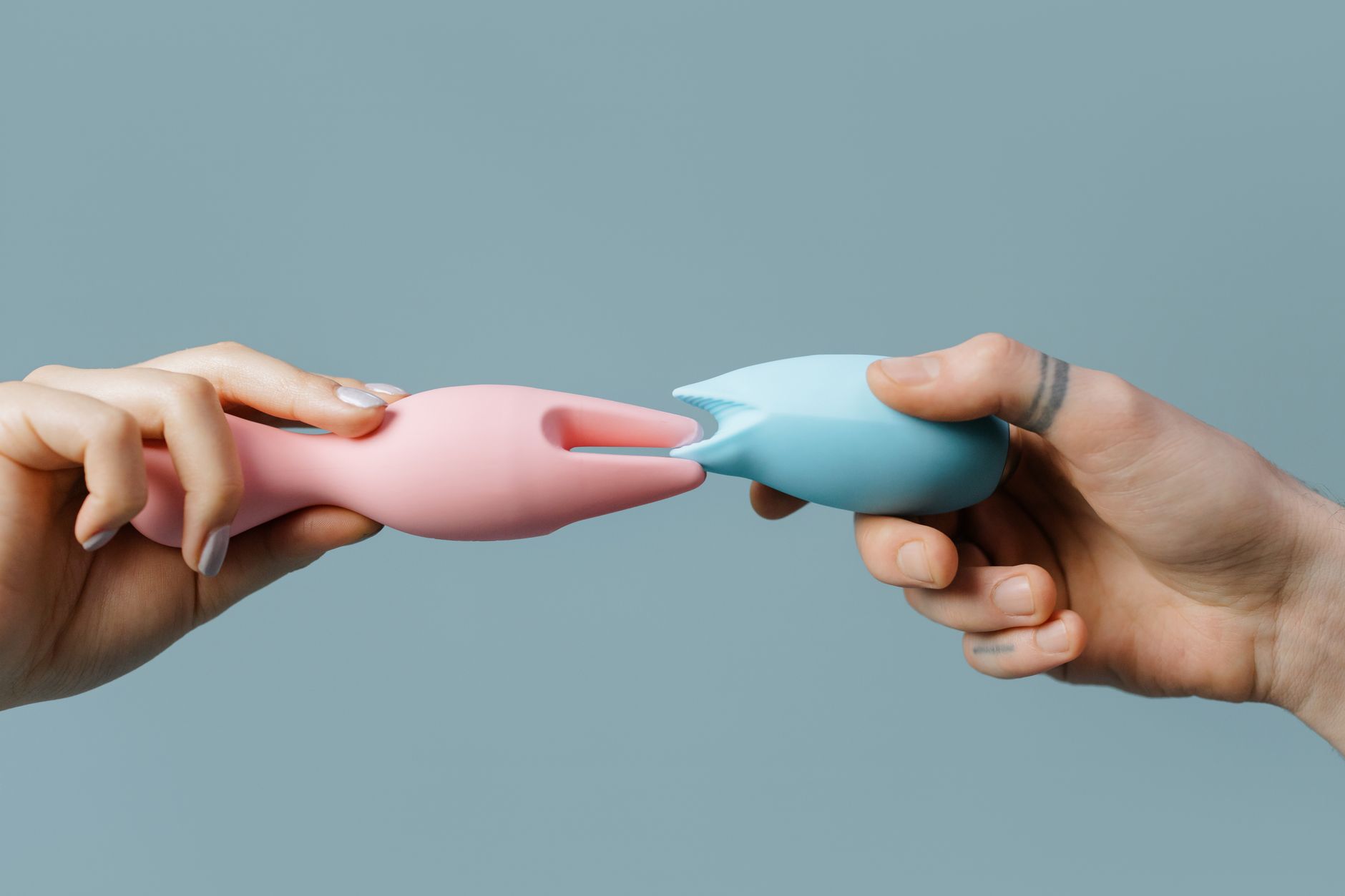
Third, solo sessions usually happen with lemon clitoral vibrators or direct stimulation, while partnered sex often involves different types of touch. Many people can't orgasm from penetration or standard manual stimulation alone. If your body is wired to need the intense, consistent stimulation that a lemon vibrator provides, then partnered sex without a toy feels fundamentally different. Your nervous system isn't confused. Your body is just asking for the right kind of input.
The real reason you freeze up
It's not that you're not attracted. It's not that you don't want to. It's that your brain is running a threat-detection script instead of a pleasure script.
Research from the Journal of Sexual Medicine shows that goal-focused anxiety about orgasm is one of the strongest predictors of orgasm difficulty. The moment you make "achieving orgasm" the metric for success, you've already failed. You've turned pleasure into a performance.
Your partner's presence doesn't make you broken. It makes you human.
How to reframe the conversation with your partner
Before you introduce a toy, separate the two conversations. One is about your body. One is about your relationship.
You might say something like: "My body needs something specific to orgasm consistently. When I'm alone with the right tool, it works. I want to explore bringing that into our time together, not because there's anything wrong with what we're doing now, but because I deserve to experience my full pleasure with you."
That's not "I can't come during sex." That's "Here's what my body needs."
Then actually listen to their response. Some partners worry a toy means they're not enough. That's worth addressing directly. The toy isn't a substitute for them. It's an amplifier. It's the difference between having sex and having phenomenal sex.
If they're genuinely resistant, how to use lemon vibrators when your partner isn't ready for toy integration walks through deeper conversation frameworks.
How lemon vibrators specifically help with partner anxiety
The suction mechanism on a lemon clitoral vibrator works differently than traditional vibration. It creates consistent, gentle stimulation that builds sensation slowly. That pacing gives your nervous system time to settle.
When you introduce a lemon vibrator during partnered time, you're not replacing intimacy. You're creating a container where both of you can focus on sensation rather than performance. Your partner can still touch you, still be close, but the lemon vibrator handles the part that creates orgasm. Their job becomes presence and connection, not mechanical stimulation.
Start with this: use your lemon clitoral vibrator solo three to five times. Get comfortable with what it feels like, what intensity you prefer, how long it takes. Then, with your partner present but not necessarily touching, use it again. They can watch. They can touch other parts of your body. They can be present without being responsible.
The goal isn't to remove them from the equation. It's to remove pressure.
Building the solo-to-partnered bridge
Most people jump straight from "I can orgasm alone" to "Let's try with you inside me." That's a massive leap. Slow down.
Phase one: Use your lemon vibrator solo. Your partner is elsewhere. Just get good at knowing your body.
Phase two: Use your lemon vibrator with your partner in the room, not touching you initially. Let them see you pleasure yourself. This is surprisingly powerful for shifting the dynamic. They're not performing. They're witnessing.
Phase three: Use your lemon vibrator with your partner touching you non-genitally. Kissing, stroking your arms, holding you. Touch that creates intimacy without creating performance pressure.
Phase four: Use your lemon vibrator while your partner is inside you or touching you genitally. Now you have a container where both of you are engaged, but the lemon vibrator is carrying the primary stimulation load.
Each phase might take weeks. That's fine. You're retraining your nervous system to understand that partner presence equals safety and pleasure, not threat and performance.
Managing the psychological shift
Your brain will still try to create pressure. The moment your partner is nearby, your internal critic wakes up. That's normal. You don't fight it by thinking harder. You fight it by building evidence.
Every time you orgasm with a lemon vibrator in your partner's presence, you're giving your nervous system new data: "Partner present equals successful pleasure." Do this enough times and the script changes.
If you're still struggling, a therapist trained in sex therapy or somatic experiencing can help. This isn't shameful. It's actually one of the most common things sex therapists work with. Performance anxiety around orgasm affects roughly 30 percent of women and a significant portion of all partners. You're not alone in this.
The tool matters, but the permission matters more
A lemon clitoral vibrator isn't magic. But it does one crucial thing. It takes the pressure off your partner to be the sole source of your pleasure. It says, "My orgasm is my responsibility, and I'm going to meet myself there."
Your partner gets to be present. They get to participate. But they don't get to fail you because your orgasm isn't their job anymore. It's yours.
Once that permission settles in, everything changes. You stop performing. You start feeling. And feeling, it turns out, is how orgasms actually happen.
People also ask
Is it normal to orgasm solo but not with a partner?
Absolutely. This is one of the most common sexual experiences across all genders and orientations. Your body isn't broken. Your nervous system is just correctly identifying that partnered scenarios involve different sensory input and psychological stakes. Some bodies need specific conditions to orgasm. That's called having preferences, not dysfunction.
Will using a lemon vibrator with my partner make them feel inadequate?
It might, initially, especially if they've internalized the idea that their touch should be enough. But that's a belief to examine together, not a reason to stay silently frustrated. A partner who loves you wants you to experience pleasure. The right conversation shifts the frame from "I need this toy instead of you" to "I need this tool so we can both feel good." Many partners find watching their partner orgasm—however that happens—to be the most intimate experience available.
How do I start the conversation about introducing a toy?
Be specific and non-accusatory. Not: "I can never orgasm with you." That lands as failure. Instead: "My body responds really well to clitoral vibration. I want to bring that into our time together so I can experience more pleasure with you." Then listen. Their feelings matter. Your pleasure also matters. Both can be true.
Can I use a lemon vibrator during penetration?
Yes. Many people use clitoral vibrators during penetrative sex. The vibrator stimulates the external clitoris while your partner handles penetration. This is actually how a lot of people with vulvas experience reliable orgasm during partnered sex. The anatomy just works better that way.
What if my partner wants to use the vibrator on me instead of me using it?
That can work beautifully—but only if you're comfortable with it. If you're already anxious about orgasm performance, handing over the tool might amplify that anxiety (now you're responsible if they use it "wrong"). Start with you controlling it. Let your partner eventually participate if that feels right. You're in charge of your own pleasure.
How long does it usually take to get past this block?
It depends on how deep the anxiety runs and how much your nervous system trusts your partner. Some people shift in weeks. Others need months. There's no timeline. What matters is that you're building new neural pathways where partner presence equals safety. That takes repetition and patience with yourself.