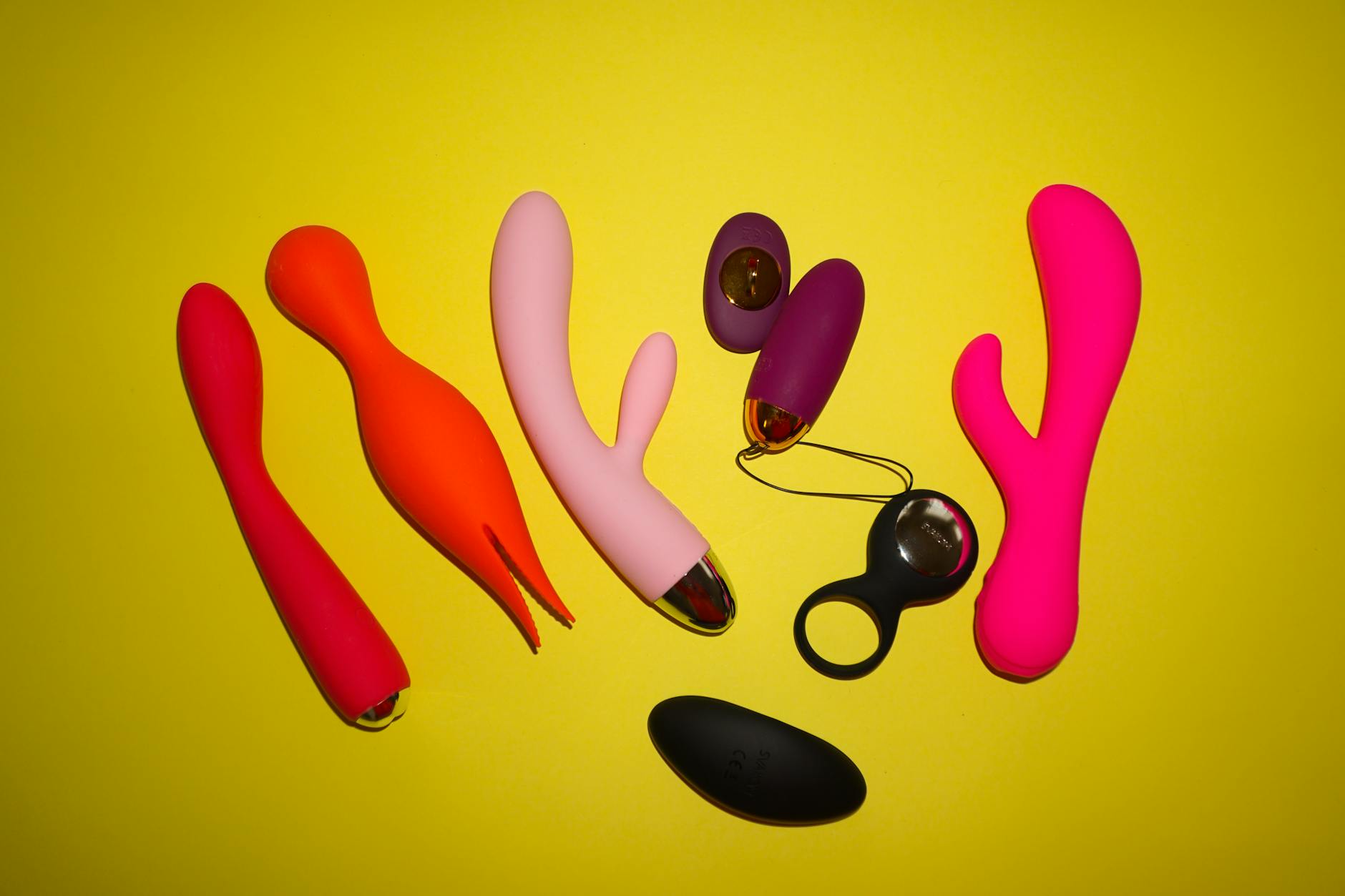
Here's the thing nobody tells you about self-consciousness
It's not really about the toy. It's about the voice in your head that says you shouldn't want this, shouldn't need this, shouldn't be touching yourself like this. That voice doesn't care if you're alone in a locked room. It shows up anyway.
I've worked with hundreds of people who have everything they need for pleasure—time, privacy, a partner who supports it, even a beautiful lemon vibrator sitting right there—and still can't get out of their own way. The mental friction is bigger than the physical friction.
Why shame kills arousal better than anything else
Your nervous system doesn't distinguish between external danger and internal judgment. When that critical voice fires up, your body reads it as a threat. Blood vessels constrict. Lubrication stops. The clitoris pulls back. Arousal collapses.
This is not weakness. This is neurobiology. Shame and pleasure literally cannot coexist in the same moment because they activate opposite nervous system states. One is about safety and opening. The other is about hiding.
Most people spend their first few attempts with a lemon clitoral vibrator fighting this exact battle. The toy works fine. Your body works fine. The problem is the running commentary that says both are wrong.
The self-consciousness comes from somewhere
Maybe you grew up in a home where bodies were private and desire was shameful. Maybe a partner once made you feel ridiculous for wanting something. Maybe you internalized the message that "good" people don't prioritize pleasure. Maybe you're worried that using a toy means something about your relationship, your body, or your sexuality.
These stories are real, they're powerful, and they're not your fault. But they're also not the truth about you or what you deserve.
How lemon vibrators actually help with this
Here's what's different about suction toys like the lemon vibrator compared to traditional vibration:
Suction is gentler on the shame response. It doesn't feel aggressive or clinical. It feels natural, almost like your own body responding. You're not "using a device." You're receiving stimulation. That distinction—passive versus active—matters enormously when self-consciousness is in the room.
The sensation is so strong that it drowns out the internal critic. Your brain can't hold both an intense physical sensation and a shame narrative simultaneously. The lemon vibrator's suction pattern is designed to be absorbing. It demands your attention. That focus gives your critical voice nowhere to hide.
Suction feels less like "trying." Traditional vibrators require deliberate positioning and rhythm. If you're self-conscious, this can feel performative. With a lemon clitoral vibrator, you position it and let it work. The passivity is actually the gift.
Starting when you're self-conscious: the real setup
Forgetting the toy for a moment. The actual setup is internal.
Name the voice. Don't fight it; name it. "That's the voice that learned to be ashamed." Not "That's true." Not "I agree." Just naming it creates distance. You're observing the thought rather than believing it.
Set a boundary with that voice. Tell yourself: "You can be here, but you don't get to interrupt this." Some people actually say it aloud. It sounds silly, and it works.
Start with 10 minutes, not an hour. Self-consciousness gets worse the longer you sit with it. You don't need a lengthy session to learn what your body likes. Ten focused minutes beats two hours of internal negotiation.
Use lube, always. This sounds obvious, but when you're self-conscious, your body often stays dry because arousal isn't flowing. Water-based lubricant removes that barrier and makes the experience feel less "forced." It's practical permission.
The first time with a lemon vibrator when shame is present
Start with the lowest setting. The lemon clitoral vibrator has multiple patterns. Pick the gentlest first. Spend five minutes just noticing what the suction feels like. No goal. No deadline. Just sensation.
The goal is not orgasm. The goal is disconnection from the shame voice, even for thirty seconds. If you get that, you've won.
If the voice gets loud, reduce the intensity. Lower suction, slower pattern. Shame gets worse when you feel out of control. Keeping the sensation manageable keeps your nervous system regulated.
If you climax, great. If you don't, that's also fine. You're building a new relationship with your body and with pleasure. That takes more than one session.
What to do when you feel ridiculous mid-session
You will. This is normal.
First, pause for ten seconds. Breathe. Actually breathe, belly breathing, slow. Your nervous system has jumped to high alert. You're literally controlling your physiology right now.
Then ask yourself: "Is this feeling ridiculous, or am I believing the story that it should be ridiculous?" Often these are different.
Then resume. Sometimes it helps to dim the lights or close your eyes completely. Sometimes putting on music helps. You're creating conditions for your critical mind to quiet down.
You don't need to push through shame. You need to create an environment where shame has fewer opportunities to take over.
How partners fit in (or don't)
If you're with a partner, this is your private time to start. Not because they can't be involved eventually. Because right now, you're learning to trust your own body and your own pleasure. Adding another person adds another set of potential judgments, real or imagined.
Once you're comfortable alone, a partner can be involved. But frame it clearly: "I'm using this to understand my body better. I'm not using it because something is wrong with us." That conversation prevents a ton of unnecessary hurt.
The psychological shift that changes everything
At some point, usually around the third or fourth session, something shifts. You stop thinking about whether you should be doing this. You start actually feeling it.
This is the moment your nervous system realizes: this is safe, this is mine, and nothing bad happens when I feel good.
That realization doesn't erase all shame immediately. But it cracks the door open. And once it's open, shame has less real estate to occupy.
What you're actually building here
You're not just learning to use a lemon clitoral vibrator. You're building evidence that your pleasure is legitimate and safe. You're teaching your body that wanting something doesn't make you bad. You're slowly, session by session, taking back territory from shame.
This is slow work. It's not the Instagram version of sexual wellness where everything is enlightened in 30 days. Some people need weeks. Some need months. That's completely normal.
The lemon vibrator is just the tool. The real work is you deciding that you're worth the pleasure, worth the time, and worth removing the judgment from the equation.
FAQ: Self-Consciousness and Pleasure
Why do I feel more embarrassed when I'm alone than with a partner?
Because with a partner, some of your nervous system is focused on connection or communication. Alone, there's nothing between you and the shame voice. This is actually useful information. It tells you the shame is internal, not relational. That means you have the power to address it.
Is it normal to feel ridiculous the first few times I use a lemon vibrator?
Completely. Your nervous system is rewiring something it was taught to hide. That doesn't feel natural yet. By the fourth or fifth time, it usually starts shifting. If it doesn't, talking to a therapist about the original shame messaging can be really useful.
Does using a lemon clitoral vibrator alone mean something about my relationship?
No. Self-pleasure is independent of partnered pleasure. Many people in happy, sexually connected relationships still use toys alone. It's not a substitution. It's a different kind of knowing your body.
What if I buy a lemon vibrator and still feel too self-conscious to use it?
Put it somewhere visible. Not hidden. The visibility actually helps. Each time you see it, you're reminding your nervous system that this is normal, that you're allowed to want this. Sometimes permission builds in small increments.
Can therapy actually help with shame around pleasure?
Yes, especially a therapist trained in sex-positive or somatic approaches. They can help you trace where the shame came from and build new neural pathways. It's faster than going it alone.
What's the difference between healthy discomfort and shame I should address?
Healthy discomfort is novelty. "This feels new and I'm adjusting." Shame is judgment. "This is wrong and I'm bad for wanting it." One settles with repetition. The other gets worse with secrecy.