
The thing nobody tells you about using toys together
Let's be real. Introducing a lemon vibrator or any clitoral suction toy into a couple's routine feels like it should be straightforward. One person gets more pleasure, both people win. But it's rarely that clean because toys carry emotional freight they shouldn't have to carry. They get tangled up with performance anxiety, comparison, and questions about what your partner's interest in the toy actually means about desire, technique, or your relationship.
Here's what I see clinically: the couples who use lemon vibrators or other adult toys together successfully aren't the ones without insecurity. They're the ones who separated the tool from the ego. They talked about it first. And they built a framework for using it that didn't hinge on either partner feeling replaced or inferior.
Why your partner might want to be involved (and what they're actually saying)
When a partner expresses interest in using a lemon clitoral vibrator together, it almost never means "I'm not enough." More often it means one of three things.
First: they've noticed you respond differently or more intensely to certain kinds of stimulation and they want to learn your body better. They're not insecure. They're curious.
Second: they want permission to stop doing something that doesn't work. Maybe manual stimulation leaves their hand tired, or they can't hit the angle that triggers your orgasm. A suction toy removes that friction from the dynamic and lets them focus on everything else. Foreplay becomes collaborative rather than a performance checklist.
Third, and this is huge: they want to feel part of your pleasure. This isn't about egos. It's about connection. When you finish with a toy while they're touching you elsewhere, holding you, or even just watching, it's a shared experience. The vulnerability of that matters.
None of these are insecurity. But people often interpret them that way because we haven't normalized the conversation.
The conversation before you introduce the toy
This is the most important part and most couples skip it. Bad call.
Start with curiosity, not a solution. "I've been thinking about trying a lemon vibrator. I'm interested in how it would feel. Would you want to explore that together?" That's very different from "My orgasms aren't good enough so we need to buy this."
If they ask why, be specific. "I've read that suction feels different from vibration and I'm curious." Or: "I think it would be hot to share that with you." Or: "I want to see if it helps me come faster so we have more time together." Whatever your real reason is, name it.
Then ask them what they're imagining. Do they picture themselves using it on you? Watching? Both of you using it? There's no wrong answer, but if you're not aligned on the fantasy, you'll be misaligned in the bedroom. Alignment takes thirty seconds of conversation and saves months of weirdness.
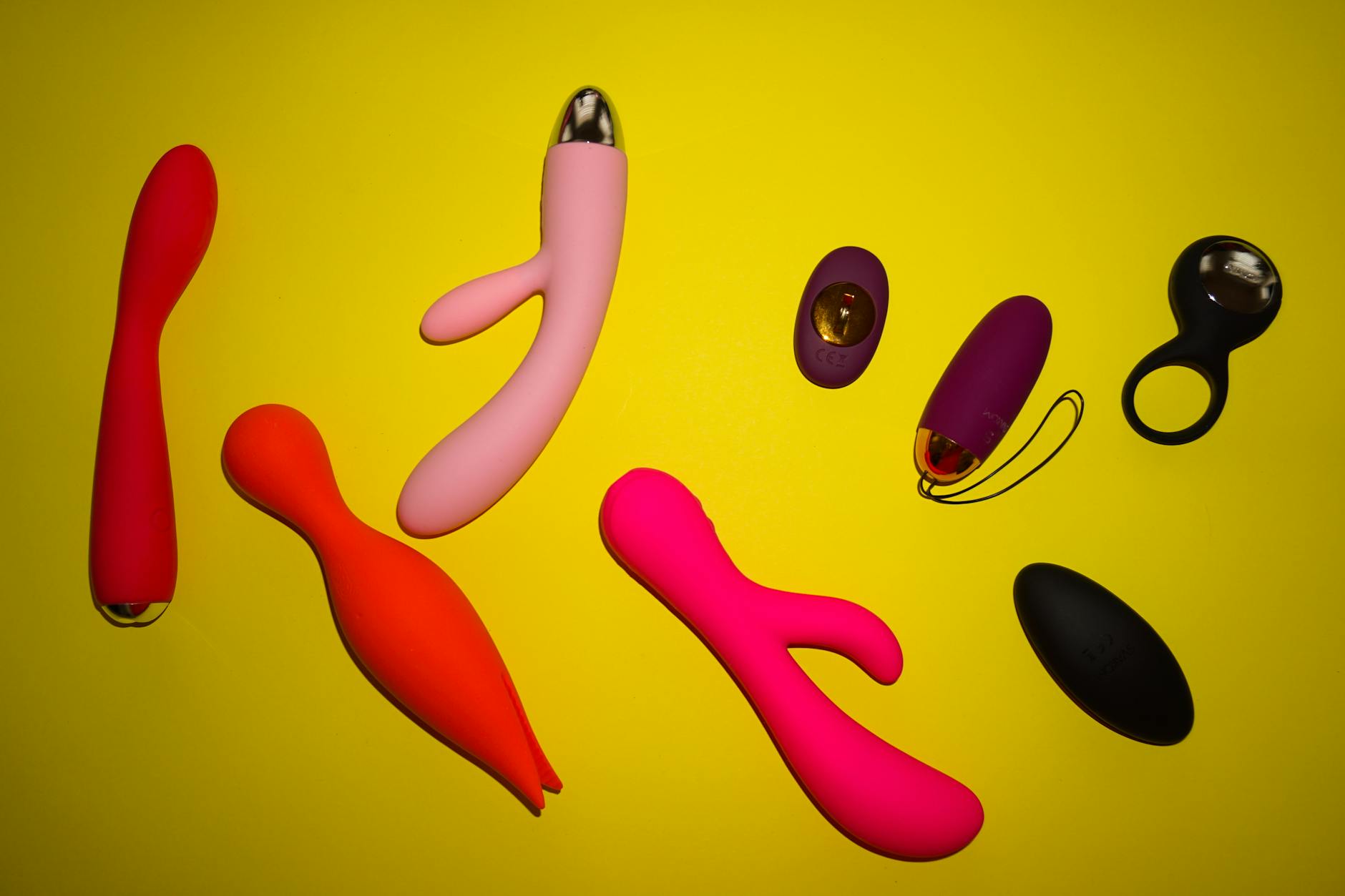
Photo by FounderTips on Pexels
Setting expectations about sensation and pleasure
Here's a thing that trips couples up: when they first try a lemon vibrator together, the partner using it on you might press too hard, hold it wrong, or move it the wrong direction. And you might interpret that as "they don't know my body" when actually you just gave them a new tool with a learning curve they've never had before.
Build in permission for the learning phase. Before you even turn the device on, show them how you hold it, where you like pressure, what patterns feel good. Let them hold it against your hand so they feel the sensation themselves. This isn't sexy foreplay, but it prevents the moment where they fumble and you lose trust.
Also name the reality: lemon vibrators and suction toys are sensitive to angle and pressure. If it doesn't feel amazing the first time, that doesn't mean the toy is wrong or your partner is incompetent. It means you're both learning. Give it two or three sessions minimum before deciding anything.
One more thing. Your partner might worry that once you experience an orgasm with the toy, you'll only want that and won't care about partnered sex anymore. This is worth addressing head-on. Tell them: "I want this with you. Not instead of you. With you." And then, in practice, prove it. Use the toy during sex sometimes. Other times don't. Show them through your choices that they're not being replaced.
The actual mechanics of using it together
There are really only three scenarios: you use it on yourself while they touch you elsewhere, they use it on you while you're touching them, or you both use toys on each other.
Scenario one is the easiest entry point. You maintain control of the device, the pressure, the rhythm. They focus on other parts of your body. Kissing. Penetration. Touching your chest or your inner thighs. The toy becomes one instrument in a larger experience instead of the whole show.
Scenario two takes more trust but often feels more partnered. They're holding the lemon vibrator and you're guiding them. "A little higher." "Gentle now." "Faster." This requires communication because they can't read your body the way you can. But when it works, it's intimate because you're literally directing them toward making you come.
Scenario three is rare and honestly works better after you've both had time with the device solo. But if you're both into it, go slow and check in constantly.
Navigating the ego stuff (because it's real)
Somewhere around orgasm two or three with your partner using a lemon vibrator on you, one of you might have a weird feeling. Maybe they feel like they're not enough. Maybe you feel exposed. Maybe they feel resentful that the toy "works" when their hands didn't. None of this means you're incompatible or that toys are bad.
It means you're human.
When these feelings come up, which they will, address them outside the bedroom. "When you used the vibrator on me last time, I felt a little weird afterward. I want to talk about it." That's vulnerability and it matters more than the orgasm.
Also remember that using toys together doesn't replace other kinds of sex. Some nights you'll use the lemon vibrator. Some nights you'll have sex without any devices at all. Some nights you might try something completely different. Variety isn't failure. It's just variety.

Photo by IFONNX Toys on Pexels
When your partner's interest feels like pressure
Here's the flip side: sometimes a partner wants to use a toy but you don't. You're not interested. Or you feel like it's a criticism of what you were already doing. That's valid and it matters.
If this is you, name it. "I appreciate you wanting to explore this, but I'm not interested right now" is a complete sentence. You don't owe a toy you don't want to use. The goal is shared pleasure, not shared toy use. There's a difference.
If your partner pushes back or makes you feel like your reluctance is a problem, that's a separate conversation. And it might need a third party. But a partner who respects your boundaries around toys is a partner who respects you.
Building a framework that lasts
After you've tried it a few times, check in. Not during sex, not in the heat of things. Over coffee or a walk. "How are you feeling about using toys together?" Listen for what's underneath the words. Sometimes people say "I love it" when they mean "I like that you come faster now." Sometimes they say "It's fun" when they mean "I'm still nervous I'm being replaced."
The best couples I know who use lemon clitoral vibrators together have done this: they separated the tool from the relationship. The vibrator isn't about whether their partner is "enough." It's just a thing that feels good. And their relationship is strong enough to absorb that thing without it becoming a referendum on desire, performance, or connection.
That's the gold standard. Not a relationship that doesn't need toys. A relationship that can use them without it becoming a whole emotional situation.
When to introduce multiple toys or variations
Once you're comfortable using a lemon vibrator together, you might explore variations. Some couples like using toys simultaneously. Some introduce other devices. The principle stays the same: talk first, check in after, and make sure both people actually want what you're trying.
Also remember that your needs might change. What felt good in your thirties might feel different in your forties. If you've been using lemon vibrators together for years and suddenly want something different, that's not failure. That's growth. How to use lemon vibrators for better orgasms when you're in your thirties might look really different from how you use them later. The framework stays the same even as the execution evolves.
FAQ
Will using a lemon vibrator with my partner hurt their feelings?
Not if you frame it right. The difference between "I need this because you're not good enough" and "I want to try this with you" is entirely about how you present it. One is criticism. The other is exploration. Choose exploration and you're usually fine. Also, many partners find it genuinely hot to help their partner come, regardless of what tool is involved. Don't assume injury that hasn't happened.
What if my partner feels threatened by lemon clitoral vibrators?
This is worth addressing because it's common and it's solvable. Usually, the threat comes from a false belief that toys mean they're not needed. Directly correct that. "I want you to understand that this is something I want to share with you, not something I want instead of you." Then show them through your actions. Use the toy during partnered sex sometimes. Other times don't. Make it clear it's one option in a toolkit, not a replacement.
Can you use a lemon vibrator during partnered penetration?
Absolutely. Many people use external clitoral vibrators or suction toys during penetrative sex. The sensation can feel amazing to both partners. Just communicate about positioning and make sure the toy isn't getting in the way. A lemon vibrator is small and designed for external stimulation, so it usually works fine. If you're trying it for the first time, go slowly and check in about what feels good.
How do you clean a lemon vibrator if your partner is using it on you?
Clean it before and after, just like any toy. Use warm water and a bit of mild soap, or a toy cleaner if you have it. Pat it dry with a lint-free cloth. If you're moving between different areas, wash your hands in between or use a barrier like a condom over the toy. It's basic hygiene but it matters, especially if you're sharing toys between multiple people or moving between areas.
What if I want to use toys but my partner doesn't?
Then you use them solo, or you find a compromise. Maybe they don't want to use it on you but they're fine with you using it on yourself while they're present. Maybe they just need more time to get comfortable with the idea. Don't force it. A partner who feels pressured into toy play is a partner who's going to resent the toy and eventually resent you. Go slow and respect their boundary. Your pleasure matters but so does their comfort.
Is it weird to use a lemon vibrator with a new partner?
It can be. New partners don't know your body yet and toys add complexity to an already vulnerable situation. I usually suggest waiting until you've been intimate a few times and you feel safe being direct about what you like. Once you have that baseline, introducing a lemon vibrator is much less fraught. You can explain exactly what you want it to do and why you want it. That's easier in established relationships but it's possible early on if you're comfortable being specific.
The real payoff
Couples who use lemon vibrators together successfully aren't magically better at sex. They're just better at communication. They had a conversation about a tool instead of pretending the tool didn't exist. They checked in about how each person was feeling. They separated the device from their self-worth. And they kept talking.
That's it. That's the entire framework. If you can do that with a vibrator, you can probably do it with most things that come up in a long-term relationship. And that's worth more than any toy ever will be.
If you're ready to explore but want help thinking through how to bring this up with your partner, reach out. That's literally what I'm here for.