
When the topic comes up (and how to bring it up first)
Let's be real. The moment you decide to introduce a lemon vibrator or any clitoral vibrator into a new relationship is loaded with unspoken questions. Will they feel replaced? Will they think I'm not satisfied? Will this be weird? Here's what I've learned from years of working with couples in early-stage relationships: the awkwardness almost always happens in your head before it happens in the bedroom.
The conversation matters more than the toy. How you frame this shapes everything that comes after.
Starting the conversation without it feeling like a negotiation
Timing is everything. Don't bring this up during sex, right after sex, or in that vulnerable five minutes after. Pick a moment when you're both clothed, reasonably relaxed, and there's no performance pressure. A walk, a lazy Sunday morning, sitting on the couch with coffee. Somewhere the conversation can breathe.
Start with desire, not deficit. "I've been thinking about exploring pleasure together more intentionally" lands differently than "I want to use a vibrator because you're not getting me there." The first statement is about abundance and curiosity. The second sounds like a complaint.
Be specific about why now. "I trust you and I want to share this with you" is powerful. So is "I've never tried this and I want to experience it with you." Specificity kills the fantasy that you want this behind their back or that you've been secretly unsatisfied.
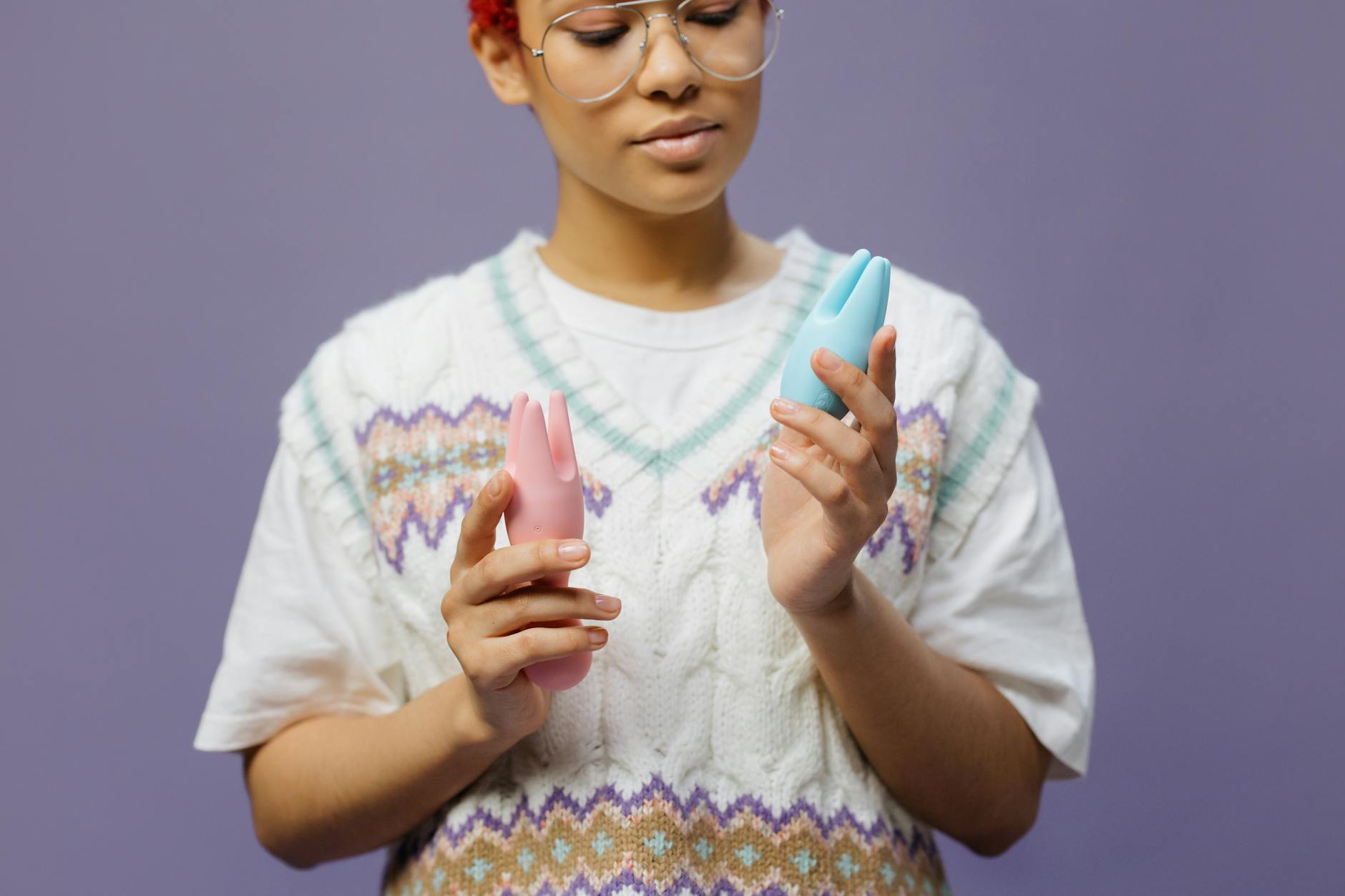
Photo by cottonbro studio on Pexels
What to do if they freeze, say no, or need time
Not every partner is ready immediately. Some need to process. Some have insecurity attached to toys. Some were raised with messages that using anything other than a partner's body means something has failed.
If they say "I need time," honor that. Don't push. If they say "No," ask why, but only once. Listen. What's the actual fear? Is it about their insecurity? Their upbringing? A past relationship? Understanding the root belief makes it easier to address.
Common fears I hear: "You'll prefer the toy to me." Answer honestly. "A vibrator gives a different sensation. It's not better or worse. And it doesn't replace what you do." "It means you're not satisfied with me." Also honest. "I'm satisfied with you. This is about exploring more dimensions of pleasure together."
If they genuinely aren't ready, that's information. You get to decide what you do with it. That's separate from the toy conversation and belongs in a larger talk about alignment and expectations in the relationship.
Choosing the right toy for partnered exploration
A lemon clitoral vibrator is ideal for couples play because it's designed for external stimulation only. There's no penetration component, which means there's no accidental pressure to choose between the toy and your partner's involvement. Everyone gets to participate in the same moment.
The Lemon Clitoral Vibrator has multiple intensity settings, which matters when you're navigating someone else's touch alongside a toy. You can start low, adjust in real time, and hand over control if things feel good.
Size also matters for couples play. A compact toy feels less intimidating in the beginning. It's easier for your partner to hold without overthinking it. It's less visually dominant in the bed. This is where starting smaller is smarter.
The first time: what to actually do
Talk logistics before clothes come off. Who will hold it? Will you guide their hand or let them explore? What patterns feel good to you? This sounds clinical, but it removes the fumbling and guesswork that makes sex awkward.
Start with your partner touching you without the toy for a few minutes. Establish baseline arousal. Then introduce the vibrator on the lowest setting. Let them feel how it works before you're in the middle of everything.
Here's the thing nobody tells you: the most important orgasm isn't the first one with the toy. It's the one where you both relax. Where they stop wondering if they're doing it right and you stop performing gratitude. That usually takes three or four attempts, not one.
If the first time feels awkward, that's normal and fine. Laugh about it. Keep the toy nearby without pressure. Try again next week. The fantasy of "first time with a toy is magical" is exactly that. Actual first times are often confused, giggly, and imperfect.
Managing the insecurity conversation (theirs and yours)
After the first experience, some partners have a delayed reaction. They felt fine in the moment but now they're spiraling. "Did I feel inadequate?" "Am I enough?" This is where your follow-up matters.
Acknowledge what happened without over-explaining. "That was really hot. I loved having you involved. I love this with you." Then move on. Don't keep reassuring unless they keep asking. Constant reassurance actually reinforces the insecurity.
Your insecurity might show up differently. You might worry they felt left out. That you were too eager. That they'll want to bring a toy into their next relationship and think of you. These thoughts are normal. They're also usually not about the actual situation. They're about attachment and trust, which is a separate conversation.
When a partner wants to use a toy on you versus you using it yourself
There's a meaningful difference. Some people want to hold the vibrator and watch. Some want you to hold it while they touch you in other ways. Some want to step back entirely while you explore.
All of these are valid configurations. The one that works best is the one where you both feel present and not sidelined. If you always use the toy alone, your partner might feel like a bystander. If they always hold it, you might lose agency over your own pleasure.
Rotate. Experiment. Ask what felt good to them. "I loved being able to watch your face." Or "I loved not having to focus and just enjoying the sensation." This feedback teaches you what to repeat.
Why couples who explore together actually have better sex
It's not because the toy makes sex better. It's because the conversation had to happen. Because you had to be vulnerable about what you wanted. Because you had to trust each other through something uncomfortable.
That vulnerability is the thing that deepens intimacy. The toy is just a catalyst.
When you're navigating pelvic floor tension or dealing with other sensitivity changes, partnered exploration becomes even more valuable because your partner understands what you need. That shared knowledge creates a shorthand that carries into other areas of your relationship.
Couples who use lemon sexual toys together also tend to communicate better about pleasure in general. Once you've said "I want us to use a vibrator," the next conversation about what you actually like in bed becomes easier.
The anti-pressure approach to using lemon vibrators as a couple
This might sound counterintuitive, but the best way to make toys a regular part of your sex life is to stop treating them as special. Don't save them for anniversaries. Don't make using a lemon vibrator feel like a performance.
Sometimes you'll use it. Sometimes you won't. Sometimes it'll feel amazing. Sometimes it'll feel neutral. All of those outcomes are fine.
The pressure to make partnered toy play "work" is the same pressure that kills most good things in the bedroom. You end up focused on whether it's hot instead of just being in the experience.
If you find that you're always the one wanting to use a clitoral vibrator and your partner rarely initiates, that's information worth discussing. But it's not a red flag about the relationship. Some people are just less toy-oriented. That's okay.
How this conversation sets you up for future intimacy
Introducing a lemon clitoral vibrator into a new relationship is actually about practicing trust with desire. It's about saying "Here's something I want" and seeing if your partner can hold that without making it about themselves.
If this conversation goes well, harder conversations get easier. Asking for what you want sexually becomes normal. Hearing your partner's needs without defending becomes possible. This is the foundation of long-term intimate connection.
If this conversation goes poorly, that's also useful information. It tells you something about how your partner handles vulnerability and desire in the relationship.
Either way, you've learned something true.
People also ask
What if my new partner thinks I'm asking them to use a toy because I'm not satisfied?
That fear is about them, not about the toy. Reassure once. "I'm satisfied with you. This is about exploring more together." Then hold that boundary. If they keep spiraling, that suggests some insecurity work they might need to do, but it's not your job to fix it by agreeing not to use a vibrator. You get to have boundaries too.
Is it weird to introduce a lemon vibrator if we've only been dating for a month?
It depends on the relationship. If you feel safe and the conversation flows naturally, no. If you're doing it because you think you should or because you're trying to keep them interested, yes. Timing should feel organic. Usually that's somewhere between two and six months when you've established basic trust but haven't settled into routine yet.
How do I use a lemon clitoral vibrator while my partner is inside me?
Lemon vibrators are designed for external clitoral stimulation, so they work well during penetration. Start before penetration happens. Get aroused first. Then you or your partner can hold the vibrator against your clitoris while they're inside you. The sensation of multiple types of stimulation at once is intense for most people. Start with lower vibration settings and build from there.
What if my partner wants to use a vibrator on themself during sex?
That's also valid and common. Some partners want to be fully present with you while also ensuring their own pleasure. If they're using a lemon vibrator on themselves while you're together, you get to feel however you feel. If it feels left out, say so. If it feels sexy, enjoy it. Your reaction shapes whether this becomes a regular thing or a one-time experiment.
Can lemon sexual toys help us reconnect if things have felt distant?
Not automatically. A toy is a tool, not a relationship repair. But the vulnerability required to introduce one can crack open a conversation that's been stuck. If you're distant because you're not communicating about desire, yes, this might help. If you're distant because of resentment or broken trust, you need to address that first, otherwise the toy just becomes another thing you're awkward about together.
How often should we use lemon vibrators once we start?
There's no standard. Some couples use them once a month. Some use them almost every time they have sex. Some people use them solo and never with a partner. There's no "should" here. Use them as often as they feel good and natural. The moment they feel obligatory is the moment to take a break and reassess what you actually want.
Start a conversation with your partner about what you both want. If you need guidance beyond the bedroom, my role as a marriage and family coach is to help you navigate the deeper stuff. Reach out at /contact if you'd like to talk through relationship dynamics around intimacy.
Your pleasure matters. Your partner's comfort matters. Finding the space where both are true is the whole game.