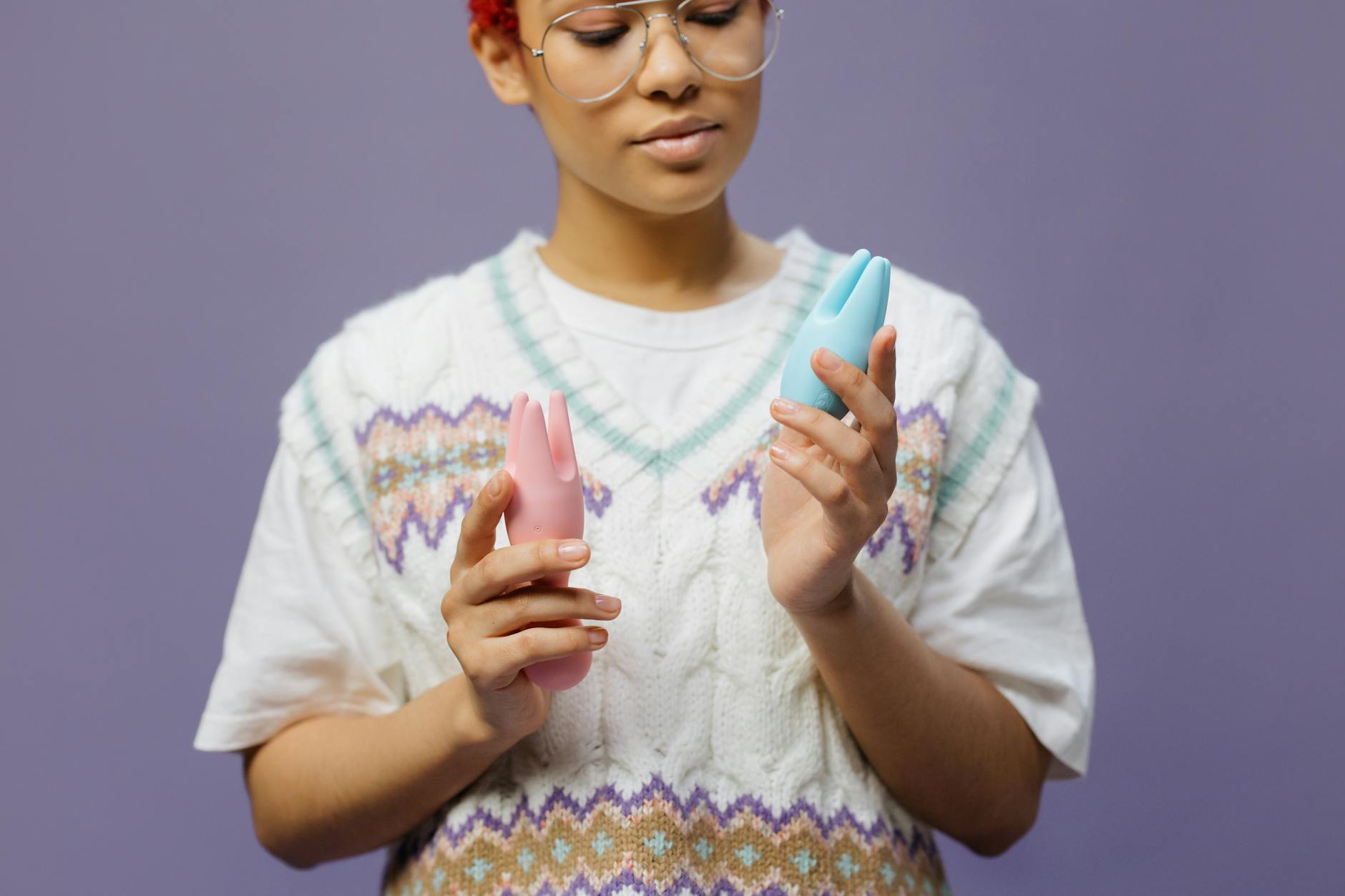
When months or years become a wall between you and pleasure
Let's be real. Whether the gap came from illness, grief, a relationship ending, depression, work burnout, or just time passing in a way that felt impossible to interrupt, returning to sex after a long break is its own kind of transition. It's not just about logistics. It's about negotiating with a body that may feel unfamiliar, a nervous system that might spike with anxiety, and a mind full of questions about whether you even still want this.
Here's what I know from working with hundreds of couples navigating this exact moment: your body hasn't forgotten how to feel pleasure. But it does need permission, patience, and usually a tool that doesn't demand anything of you. That's where lemon clitoral vibrators come in. They're not pushy. They work with your nervous system instead of against it.
Why your nervous system needs a different approach right now
After extended time away from sexual touch, your vagina, clitoris, and nervous system have all recalibrated. That's not dysfunction. That's adaptation. The tissue may feel tighter or less responsive. Your pelvic floor might be holding tension without you realizing it. Your brain might send alarm signals the moment arousal starts to build, which is completely normal when you've been away for a while.
Traditional vibrators demand a response. They're often intense from the first second, which means your nervous system has to either keep up or shut down. Lemon vibrators work differently. Suction technology stimulates the clitoris through gentle, rhythmic pulses rather than friction. This gives your body time to remember what pleasure feels like without overwhelming your nervous system. You're not forcing your body to catch up with a machine. The machine is meeting you where you actually are.
This distinction matters because anxiety is the number one reason sex doesn't feel good after a long break, not physical damage or lost capacity.
Starting solo first isn't a setback
I tell almost everyone in this situation the same thing: before involving a partner, spend a few sessions alone with a lemon vibrator. This isn't about avoiding your partner. It's about giving your nervous system a safe space to relearn pleasure without any performance pressure or expectations.
When you're alone, there's no one to impress, no one's needs to manage, no timeline you're supposed to follow. You can stop whenever you want. You can explore at whatever pace feels right. You can spend forty-five minutes not having an orgasm and still call it a win because you felt something.
Start with the lemon vibrator on the lowest setting. Don't aim for orgasm. Aim for curiosity. What does this feel like? Where on your vulva does the sensation land? Does it feel good, neutral, or too intense? These are the questions that matter right now.
Most people who've been away from sex for months or years report that the first solo session is awkward and quiet. The second is less awkward. By the fourth or fifth, something shifts. Your body starts to trust that this is actually safe. That it actually feels good. That you're allowed to want this.
The anatomy of easing back: four practical stages
Stage One: Just holding it (Days 1-2). Seriously. Hold the lemon vibrator against your vulva without turning it on. Let your nervous system adjust to the touch, the warmth, the idea that this is happening. Some people do this for a few minutes. Others spend a whole session just here. That's fine.
Stage Two: Lowest setting, external only (Days 3-5). Turn it on to pattern 1 or 2. Keep it on the external clitoral area. No penetration, no targeting the urethral opening. Just gentle suction and rhythm. You're literally just reintroducing sensation. Spend 10-15 minutes here if you want, or stop after two minutes. Your pace, your rules.
Stage Three: Building rhythm (Week 2). Now you can move through the patterns, staying with what feels good. Maybe you land on pattern 3. Maybe you go back and forth between two patterns. The point is you're starting to build a small window of arousal. This stage typically lasts a week or two, and orgasm might happen or might not. Either way counts as success.
Stage Four: Exploring with a partner (Week 3+). Once you've had a few solo sessions where you felt calm and in control, you can introduce your partner. And honestly, I'd start there too. Let them hold the lemon vibrator while you guide them. You stay in charge of the speed, the pressure, the pattern. This is the opposite of a power dynamic. It's you teaching them how to touch you.
Water-based lube is your friend, even if you don't think you need it
After a long break, vaginal tissue can feel drier or less plump than before. This isn't because something is wrong. It's because less arousal means less blood flow to the tissue, and less blood flow means less natural lubrication. Water-based lubricant addresses this without adding extra steps or shame.
Use enough that you feel the glide, not just a slick surface. Reapply halfway through if you need to. Quality water-based lube shouldn't feel sticky or dry out quickly. It should feel like an extension of your natural response, not a workaround.
Do this even if you eventually don't need it. Lube is not a sign of failure or loss of capacity. It's a tool that makes pleasure more accessible. Full stop.
Pelvic floor tension is probably happening without you knowing
After months away from sexual activity, your pelvic floor muscles tighten up. They're protective. Your nervous system held them tight during whatever kept you away from sex, and they're still holding. This tension can make everything feel uncomfortable, blocked, or numb.
Before each session with your lemon vibrator, spend two minutes just breathing into your pelvic floor. Breathe in for four counts, then exhale for six counts and consciously relax the muscles between your vulva and anus. You might feel them release like opening a fist. You might feel nothing. Both are normal. The point is you're signaling to your nervous system that it's safe to soften.
If pelvic floor tightness is severe, or if you feel genuine pain rather than just awkwardness, that's worth mentioning to a pelvic floor physical therapist. They can assess whether you need some hands-on work before returning to solo or partnered touch.
When to involve your partner: timing and conversation
You don't need permission to start using a lemon vibrator alone. But before you invite your partner into this, have a conversation. Not during sex. Not in bed at night. Have it while you're both clothed, maybe with tea, when you're thinking clearly.
Here's what I recommend saying: "I want to start exploring pleasure again, and I'm going to do some of this solo first so I'm not putting pressure on both of us. When I feel ready, I'd love your involvement, but I'll need to be in charge of the pace and what happens. That's not about you. It's about me rebuilding trust in my own body." Most partners respect that. The ones who don't? That's information too.
When your partner does get involved, how to use lemon vibrators with your partner for the first time is a whole conversation on its own. For now, the key is that you stay in control of the tool and the pace.
The emotional part matters as much as the physical
Pleasure after a long break isn't just a physical recalibration. It's also an emotional one. You might feel guilt that you want this. Shame that your body doesn't respond the way it used to. Grief about the time that passed. Frustration that something that used to feel simple now feels complicated.
All of that is normal. All of it is worth naming, either alone or with a therapist. What I've learned from years of working with couples is that the people who move through this transition most gracefully are the ones who don't expect their body to immediately bounce back. They grieve what was. They get curious about what could be next. They use tools like lemon clitoral vibrators not as a fix but as a way of saying to their nervous system: "We're safe again. We can explore."
That reframing changes everything.
FAQ: Your questions about returning to sex after a break
Is it normal to feel pain or discomfort when I start using a lemon vibrator again?
Some mild discomfort from tension or unfamiliar sensation is normal. But sharp pain is not. If you feel genuine pain, stop and give yourself a few days. If it persists, check in with a pelvic floor therapist or gynecologist. Pain is your nervous system's way of saying something needs attention. Listen to it.
How long until I can have sex with my partner again?
There's no timeline. Some people feel ready after a month of solo exploration. Others take three months. I've worked with couples who took six months. The metric that matters is whether you feel calm and curious when you think about sex, not whether some arbitrary deadline has passed. If you're still anxious when you imagine it, you're not ready. And that's completely okay.
What if I don't orgasm for a while? Is something broken?
No. After a long break, the nervous system often needs several sessions just to feel safe before orgasm becomes possible. You might feel arousal, pleasure, and connection without orgasm for weeks. That's not failure. That's your body being smart and protective. Orgasm will come back when your nervous system is ready.
Can I use a lemon vibrator even if I'm taking medication that affects sensation?
Maybe, depending on the medication. Some medications do reduce genital sensation, and a suction-based lemon vibrator might actually be better than a traditional vibrator in that case because it stimulates nerves differently. Talk to your prescribing doctor or a sex therapist who works with medication effects. Don't just assume it won't work.
Should I tell my partner I'm using a lemon vibrator alone, or is that private?
That's your call. Some people find honesty easier. Some people prefer a small grace period of privacy while they reconnect with their own body. There's no right answer. Just know that secrecy and shame often travel together. If you're hiding it because you're embarrassed, that might be worth exploring with a therapist. If you're keeping it private because you need space to remember who you are sexually before bringing someone else in, that's wisdom.
What if my partner doesn't want me to use a lemon vibrator?
That's a relationship conversation, not a sexuality conversation. Some people have anxiety around toys because they think it means they're not enough. That fear is worth addressing directly and probably with a couples therapist. Using a lemon vibrator isn't a statement about your partner. It's a statement about your right to explore your own pleasure. Those are separate things.
You're not starting over. You're starting again.
The language we use matters. "Starting over" sounds like you're back at square one, like those months or years were erased. That's not what's happening. You're starting again with a different body, a different mind, a different relationship to pleasure. That's not less. It's just different. And honestly, a lot of people find it's actually more interesting the second time around.
Lemon vibrators won't fix the gap that time created. But they can help you cross it gently, without pressure, and at exactly your pace. That's the whole point.
If you're struggling with this transition alone, reaching out to a sex therapist or couples counselor is never a bad call. Sometimes you need someone to help you untangle the physical from the emotional. And sometimes you just need permission to take your time. You have that permission from me right now.