Sexual avoidance isn't about not wanting pleasure. It's about not feeling safe enough to pursue it.
Maybe it started after infidelity, or a miscarriage, or a partner who didn't listen. Maybe it was gradual withdrawal from a relationship that stopped meeting you. Or maybe you stepped away from sex altogether because your body stopped feeling like yours. The trigger varies. The result is the same: desire went dormant, and the idea of touching yourself or being touched feels risky in ways you can't quite name.
Here's what I see clinically: people in recovery from sexual avoidance often believe they need their partner to reignite desire first. They're waiting for permission, or for proof the relationship is safe again. What actually works is the opposite. You rebuild connection to your own pleasure first, in private, at your own pace. Everything else follows from there.
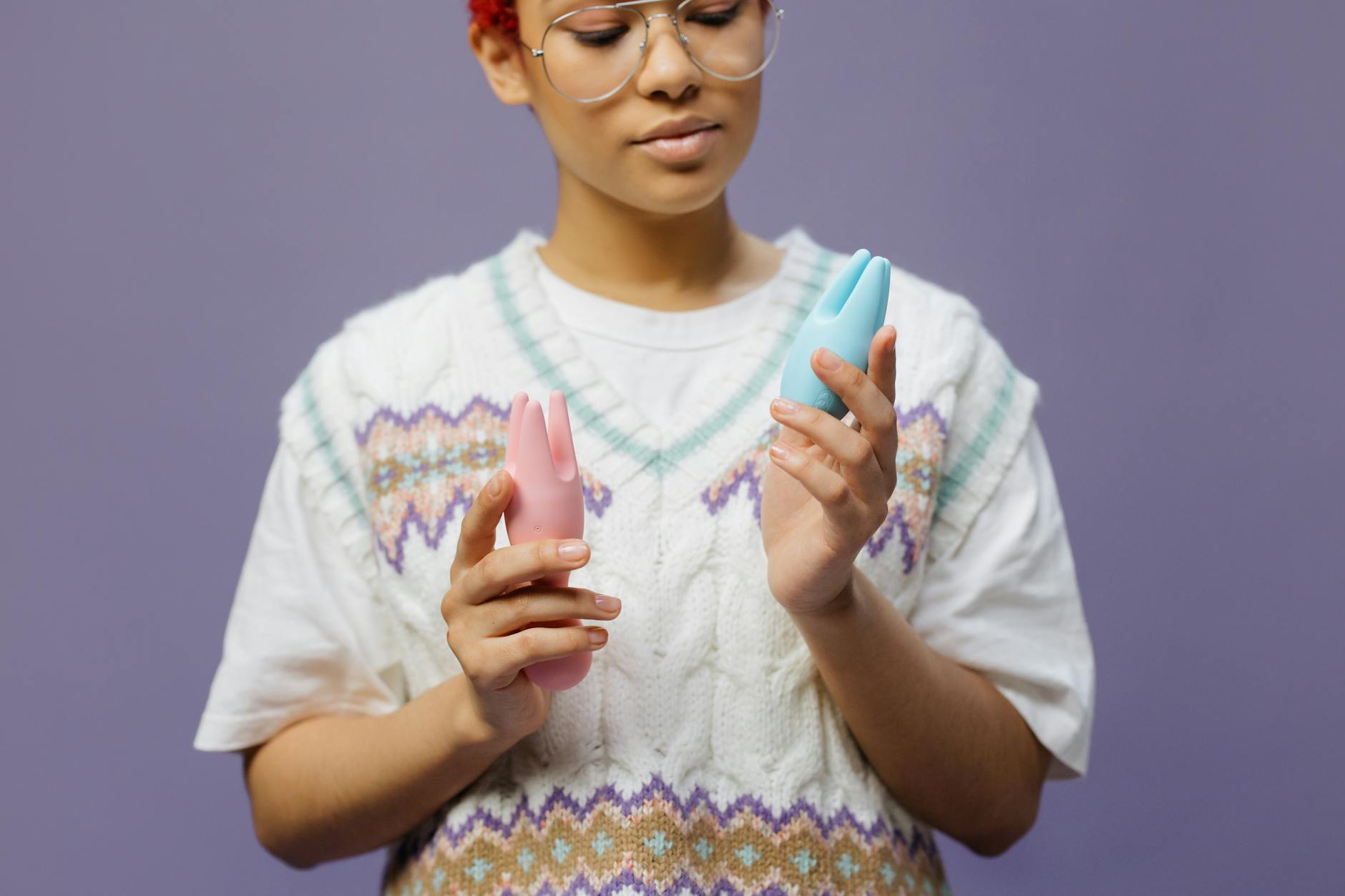
This is where a clitoral vibrator like the Lem enters the picture. Not as a solution to a broken thing. As a tool for remembering that your pleasure was never the problem in the first place.
Why lemon vibrators work specifically for recovery
Avoidance creates a kind of learned disconnection. Your nervous system learned that sexual touch meant risk, and it built walls to protect you. Those walls are smart. They kept you safe. But now they're working overtime, and a single touch can feel like an intrusion.
Clitoral vibrators sidestep some of that alarm response because they're different from partnered touch in three critical ways.
First, you control the intensity completely. There's no unpredictability, no surprise. You know exactly what's coming because you're choosing it. Your nervous system can relax slightly into that certainty.
Second, suction-based lemon vibrators (like the air-pulse clitoral stimulators) create a gentle pressure wave rather than direct friction. For people in recovery, that diffuse sensation often feels less invasive than the pointed intensity of other toys. It's a slower path back in.
Third, using a toy solo means there's nobody watching, nobody waiting for a particular response, nobody measuring your arousal. You can stop whenever it doesn't feel right. You can restart. You can sit with it for two minutes and feel absolutely nothing and that's fine. There's no performance anxiety because the only audience is you.
The nervous system retraining that happens first
Before you even touch a vibrator, your job is smaller: I'm going to explore what safety feels like in my body again.
This doesn't sound sexy. It isn't meant to be. It's the foundation.
Spend a few days (or a week, no rush) noticing when your body genuinely relaxes. Not during sex. During your regular day. Maybe it's in the shower. Maybe it's lying in bed before sleep. Maybe it's after exercise. Notice the physical sensations: your shoulders aren't up by your ears. Your jaw isn't clenched. Your breathing is steady.
When you locate that state, you're not building arousal yet. You're teaching your nervous system that it's okay to relax into sensation without immediately jumping to threat.
Once you've identified that feeling, bring it into the bedroom intentionally. Light the space in a way that feels good. Put on music or silence, whatever makes your body settle. Lie down. Spend 10 minutes just feeling your breath. No agenda. No performance.
Then, and only then, bring the vibrator into reach. You're not using it yet. You're just getting comfortable with its presence nearby.
Your first actual session with a clitoral vibrator
When you're ready, here's the structure I suggest.
Start with your clothes on. I'm serious about this. The vibrator can go over underwear or pants. The physical barrier matters for your nervous system right now. You're not avoiding pleasure. You're giving yourself permission to experience it without the full vulnerability of nakedness.
Turn the vibrator on at the lowest setting. If you have a device like the Lem, start at pattern 1 or 2. Place it near (not on) your clitoris. You're not looking for sensation yet. You're looking for comfort.
This first session might last two minutes. That's not a failure. Your body is learning that vibration equals safety, not threat. Two minutes is progress.
When you turn it off, notice how you feel. Not aroused, necessarily. Just... what's your nervous system doing? Calm? Tense? Curious? Confused? All of those are data. None of them are wrong.
Repeat this clothed practice for several sessions. Maybe a week. Your brain needs repetition to rewire the association between stimulation and safety.
Moving from clothed to skin contact
When clothed sessions start feeling boring rather than scary, you're ready for the next step.
Remove your underwear but stay otherwise clothed (or under a blanket). This is a compromise your nervous system can work with.
Use the vibrator in the same way: lowest setting, starting near the clitoris, no expectation of arousal. Just presence.
You might notice sensation you haven't felt in years. Your body might suddenly remember that pleasure and vulnerability aren't the same thing. That's the rewiring happening.
If at any point this feels unsafe, stop. There's no shame in that. Wrap up, take a breath, do something grounding. Your nervous system isn't ready yet, and that's okay. Try again in a few days.
When arousal finally returns (and how it feels different)
For a lot of my clients rebuilding after sexual avoidance, arousal doesn't feel like it used to. It's slower. It's quieter. It doesn't flood your entire body. It might just be a slight softening around your pelvis, a warmer sensation, or just the absence of tension.
Don't wait for the big feeling. That's old, pre-avoidance arousal. Your body might be a different version now, and that's normal.
Once you notice even subtle arousal, you can increase the intensity on the vibrator slightly. Pattern 3 instead of pattern 1. Or direct contact instead of through fabric. Move at the pace your body shows you, not at the pace you think you should be moving.
Orgasm during recovery often feels anticlimactic literally. Your body might not be ready for the full release yet. You might get 80% of the way there and plateau. Stop expecting the finish line. The point is that you're reconnecting with sensation, and that's enough.
Integrating this back into your partnership
Once you've rebuilt trust with your own pleasure, bringing a partner back in is a separate conversation and a slower process.
The mistake people make is jumping from solo pleasure straight to partnered sex. Your nervous system just learned that solo pleasure is safe. It doesn't automatically extend that trust to another person.
Instead, start with telling your partner you're using a clitoral vibrator as part of your recovery. Not as an invitation to participate yet. Just as information. Transparency matters for rebuilding trust.
When you're ready (weeks or months in), you might explore having your partner in the room while you use the vibrator solo. Later still, they might hold it. Even later, it might become something you use together.
But there's no rushing. And if partnered touch stays uncomfortable for a while, that's data about what your nervous system still needs. Not a referendum on your relationship.
What to know about the process
Recovery from sexual avoidance is not linear. Some weeks you'll feel connected to pleasure and confident. Other weeks something will trigger your nervous system and you'll feel unsafe all over again. That's normal. Trauma and avoidance don't follow a clean trajectory.
If you're also working with a therapist (which I recommend), tell them you're doing this. A good therapist will see it as exactly the kind of body-based recovery work that matters.
And if at any point this feels worse rather than better (increased anxiety, flashbacks, dissociation), stop and reach out for professional support. A clitoral vibrator is a helpful tool, but it's not a substitute for trauma therapy if deeper work is needed.
You're not broken. Your nervous system was protecting you. And now you get to slowly, safely teach it that pleasure can coexist with safety.
People also ask
How long does it take to rebuild sexual desire after avoidance?
It depends on how long the avoidance lasted and what caused it. I've seen clients feel shifts in 4-6 weeks of consistent solo exploration. Full rekindling of desire usually takes 3-6 months. But there's no deadline. Your body will move at the pace it needs to, and pushing faster usually backfires.
Can I use a lemon vibrator if I have trauma from sexual assault?
Yes, with professional guidance. If you have trauma history, work with a trauma-informed therapist alongside any solo exploration. They can help you stay within your window of tolerance and recognize when you're moving too fast. Lemon vibrators' gentle suction is often better tolerated than other toy types, but individual responses vary hugely.
What if my partner doesn't want me to use a vibrator during recovery?
That's a separate relationship conversation that needs to happen directly. A partner's discomfort with toys sometimes masks their own insecurities or control issues. If the relationship is healthy, they'll understand that your recovery is about you reclaiming agency over your own body. If they're rigid about it, that's information about whether this relationship supports your healing.
Is it normal to not reach orgasm during recovery?
Completely normal. Orgasm isn't the metric of success here. Connection to sensation, safety, and permission are. If you never reach orgasm with the vibrator, but you feel 10% more comfortable in your body, that's the win.
Should I tell my partner I'm using a clitoral vibrator for recovery?
Eventually, yes. Transparency rebuilds trust. But the timing matters. Wait until you feel stable with it solo and have processed your own feelings. Then bring it up as factual information, not as an invitation to problem-solve. "I'm using the Lem as part of my recovery" is different from "I think we need to fix my avoidance."
What if using a vibrator brings up difficult emotions?
That's actually a sign the nervous system is processing something. Grief, anger, or sadness during pleasure recovery is common. Feel it, don't push through it. Maybe stop the session and journal or move your body. Or keep going if it feels manageable. Your body knows what it needs.
The recovery you deserve
Sexual avoidance is a rational response to harm or disconnection. It makes sense. But it doesn't have to be permanent. Your body remembers what pleasure felt like, even if that memory is buried under years of protection.
Using a clitoral vibrator during recovery isn't selfish or reckless. It's the opposite. It's you saying: I deserve to feel good in my body again. I deserve pleasure that's mine alone. I deserve to heal at my pace.
Start small, be patient with yourself, and know that every session (even the quiet, uneventful ones) is a small act of reclamation. If you're stuck or feeling confused about your recovery process, reach out to a therapist who specializes in sexual health. You don't have to do this alone.
Your pleasure matters. You matter. Start there.