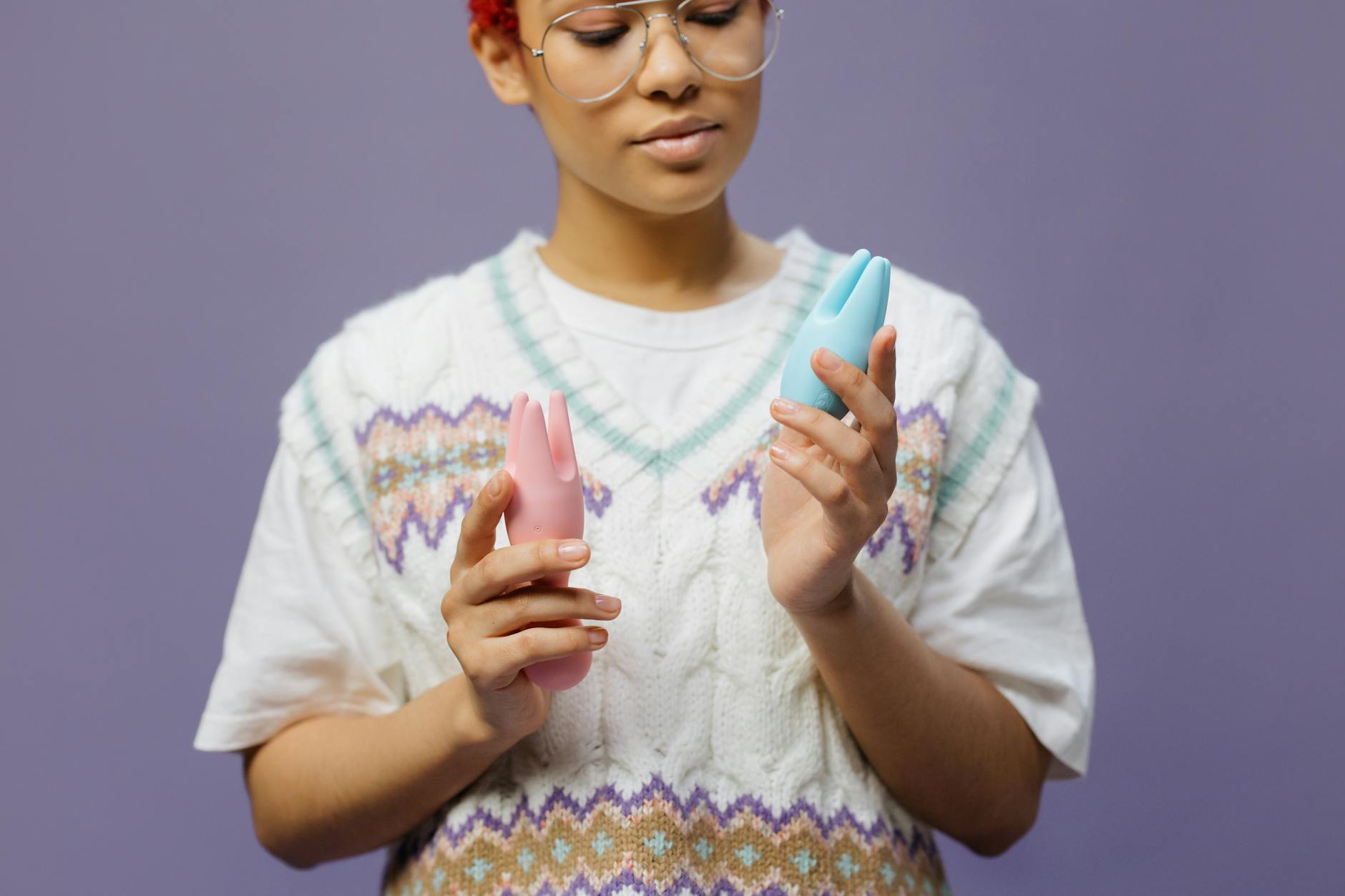
Here's the thing nobody tells you about meds and pleasure
You started a new antidepressant, switched birth control, or got prescribed something for blood pressure. Your mental health got better. Your blood pressure stabilized. And then your body stopped cooperating the way it used to.
It's not in your head. It's literally the medication changing how your nervous system fires, how blood flows to your genitals, and how your brain processes sensation. And it's wildly common. Maybe 40-60% of people on SSRIs experience some shift in arousal or orgasm capacity. Nobody warns you about this when you're signing the paperwork.
The good news: this is temporary, manageable, and way easier to navigate with the right tools.
What medication actually does to your arousal system
Most sexual side effects fall into three buckets: delayed arousal (takes way longer to get turned on), reduced sensation (everything feels muffled), or difficulty reaching orgasm. SSRIs like sertraline and paroxetine are the biggest culprits, but hormonal birth control, blood pressure medications, and antihistamines can all shift things too.
Here's the mechanism: SSRIs increase serotonin in your brain, which is great for mood stability but can dampen dopamine signaling. Dopamine is one of the key neurotransmitters in sexual response. Lower dopamine means less urgency, less physical responsiveness, and often a longer runway to arousal.
Hormonal birth control changes estrogen and progesterone levels, which directly affects blood vessel elasticity and genital tissue sensitivity. Blood pressure meds restrict blood flow in ways that can make it harder for your genitals to engorge with blood during arousal.
The bottom line: your body isn't broken. Your chemistry shifted. And your old arousal pattern no longer fits.
Why lemon clitoral vibrators work better during medication transitions
When your natural arousal is muffled by medication, stimulation that's too subtle gets lost. A partner's touch or a passive vibrator might not cut through that numbness. Lemon vibrators, specifically their suction-based design, apply consistent, focused pressure that your nervous system actually registers, even when sensation feels dulled.
The suction motion activates different nerve pathways than traditional vibration. Instead of relying on friction or micro-vibrations alone, the suction creates a gentle vacuum that pulls and releases on the clitoral complex. This engages more nerve tissue at once and requires less of your dulled receptors to trigger a response.
For people on medication, this means you can actually feel the stimulation happening, which builds confidence and arousal feedback. You're not chasing sensation into a void.
Step one: recalibrate your warm-up timeline
Forget your old speed. If you used to get turned on in 5-10 minutes, budget 20-30 now. This isn't failure. This is your nervous system under medication needing more runway.
Start with non-genital touch. Hands on your inner thighs, neck, shoulders. Breathe slowly. Spend 10 minutes just warming your body up before you even think about your clitoris. Your partner can do this, or you can do it solo.
Why this matters: medication has often quieted your body's automatic arousal signals. If you're used to jump-starting directly into intensity, you're fighting your own biology. Slowing down lets your nervous system actually register what's happening and start building arousal gradually.
Step two: start with the lemon vibrator at lower settings
Most lemon clitoral vibrators have multiple suction levels. If yours does, start at level 1 or 2. Spend 5-10 minutes at that level before increasing intensity.
This serves two purposes. First, your sensitivity is altered right now. What felt like "nice" before might feel overwhelming or weirdly painful. A gentle start lets you figure out your new baseline. Second, low-intensity stimulation for longer often produces better results than high intensity for short bursts when you're on medication that dampens sensation.
Many of my clients report that their best orgasms on SSRIs came from spending 15-20 minutes at a steady, moderate level rather than chasing maximum intensity. Your brain needs time to build the arousal cascade.
Step three: add lubrication generously
Medication often reduces natural lubrication. Hormonal birth control especially can leave things feeling drier. Don't assume your body "isn't working." It's working differently.
Use a water-based lube with your lemon vibrator. Apply it directly to the toy and to your body. Reapply midway through if you need to. This does two things: it reduces friction that might feel uncomfortable, and it helps the suction seal of the toy work more effectively.
Water-based lubes are your friend here because they feel closest to your body's natural response and won't degrade silicone toys. Silicone lubes last longer but can damage silicone vibrators, so stick with water-based.
Step four: combine solo exploration with partner connection
If you're in a relationship, one of the best ways to navigate medication-related arousal changes is to separate solo pleasure from partnered sex for a bit. This sounds counterintuitive, but here's why it works.
When you're figuring out your new arousal pattern on medication, having a partner watching or waiting for you to "perform" adds pressure. That pressure actually makes arousal harder. Instead, spend a few weeks exploring your body solo with your lemon vibrator. Learn what works now. Build confidence that you can still reach orgasm. Then bring that knowledge back to partnered sex.
For couples, this also shifts the dynamic from "fix the problem together" to "explore together." How Lemon Vibrators Work for Couples Who Want Solo Pleasure Time covers this in more depth, but the principle is simple: you're not defective, you're just recalibrating.
Step five: track what works and what doesn't
Medication affects everyone differently. Your friend on the same antidepressant might have a totally different experience. So stop guessing and start paying attention.
Notice: Which vibrator levels feel best? How much warm-up time do you actually need? Do you respond better to suction alone or suction plus some vibration? What time of day is your sensation clearest? How much lube helps? Are there positions or angles that feel more responsive?
Keep a private note on your phone if that helps. Within 2-3 weeks, you'll have a map of your new arousal system. This isn't tedious. It's empowering because you're no longer in the dark.
The timeline for medication adjustment
Here's what the research actually shows: most sexual side effects from SSRIs either improve after 4-6 weeks or they don't improve on their current dose. If you're 6-8 weeks in and things haven't shifted, talk to your prescriber about either adjusting your dose, switching to a different class of antidepressant, or adding something like bupropion, which actually increases dopamine.
For hormonal birth control changes, you might see improvement after 2-3 months as your body adjusts to new hormone levels. For blood pressure meds, sometimes a dose adjustment helps.
The point: medication-related arousal changes aren't permanent, but they're also not something to white-knuckle through alone. If you're 8 weeks in and still struggling, that's a conversation for your doctor, not something to manage indefinitely with just your lemon vibrator.
When to loop in your prescriber
If pleasure changes suddenly after starting medication, tell your doctor. Not as an afterthought. Not when you're embarrassed. At your next appointment, matter-of-fact: "The medication is working for my mood, but I've noticed arousal is harder. What are my options?"
Good prescribers know this is common and have strategies. Bad ones say "it'll go away" and send you off. If yours does that, you're allowed to ask for a second opinion or switch providers.
People also ask
Do lemon suction toys work if I'm taking antidepressants?
Yes, but differently than they did before medication. Because suction-based toys engage a broader nerve pathway than traditional vibrators, they're often more effective when sensation is muted by SSRIs. Many people find the focused pressure of a lemon clitoral vibrator cuts through the numbness better than subtler stimulation. You might need longer warm-up time and lower starting intensity, but the mechanism itself works well for medication-altered arousal.
How long does it usually take for sexual side effects to improve?
It depends on the medication and your body. For SSRIs, most people either see improvement within 4-6 weeks or it stays consistent at the current dose. For hormonal birth control changes, expect 2-3 months for your body to adjust. For blood pressure meds, sometimes it's dose-dependent and improves with adjustment. If you're 8+ weeks in with no improvement, that's when to talk to your prescriber about alternatives.
Can I switch medications to avoid arousal changes?
Sometimes, yes. Different SSRIs have different sexual side effect profiles. Sertraline and paroxetine are notorious for arousal issues. Bupropion, on the other hand, often increases libido. But switching medications isn't always possible or advisable. Talk to your prescriber about whether a switch makes sense for your specific situation, mental health history, and needs.
Is reduced sensation permanent?
No. It's medication-dependent, not a permanent change to your body. Once you adjust to the medication (if the side effects improve) or switch to a different one, sensation typically returns to baseline. In the meantime, tools like lemon vibrators help you maintain pleasure and connection while your body adapts.
Should I stop taking my medication because of sexual side effects?
Absolutely not without talking to your prescriber. I know arousal matters. Your mental health also matters, and probably kept you alive or stable. The goal is finding a medication that works for both. That might mean adjusting dose, switching drugs, adding something to counteract the side effect, or using tools like lemon vibrators while your body adapts. It's not an either-or.
Can my partner help if medication is affecting my arousal?
Yes, but in a specific way. Instead of trying to "fix" it during partnered sex, the most helpful thing partners do is normalize the adjustment phase and give space for solo exploration. Many couples find that when one person spends 2-3 weeks with a lemon vibrator solo, figuring out their new arousal pattern, sex together gets way easier because there's less pressure and more actual information about what works now. How to Use Lemon Vibrators When Reconnecting After Emotional Distance has more on partner dynamics during these shifts.
The reset
Medication changes your chemistry. That's not a failure on your part. That's your body doing what the drug is designed to do. Arousal adjusts too, and that's a known, manageable part of the process.
Your lemon clitoral vibrator isn't a workaround. It's a tool designed to work with your nervous system during a transition. Use it, pay attention to what helps, and give yourself permission to recalibrate your timeline and expectations while your body adapts.
If things haven't improved after 8 weeks, reach out to your doctor. If you want to talk through how this is landing in your relationship or where to start, reach out to us. You're not alone in this, and it genuinely does get easier once you know the lay of the land.