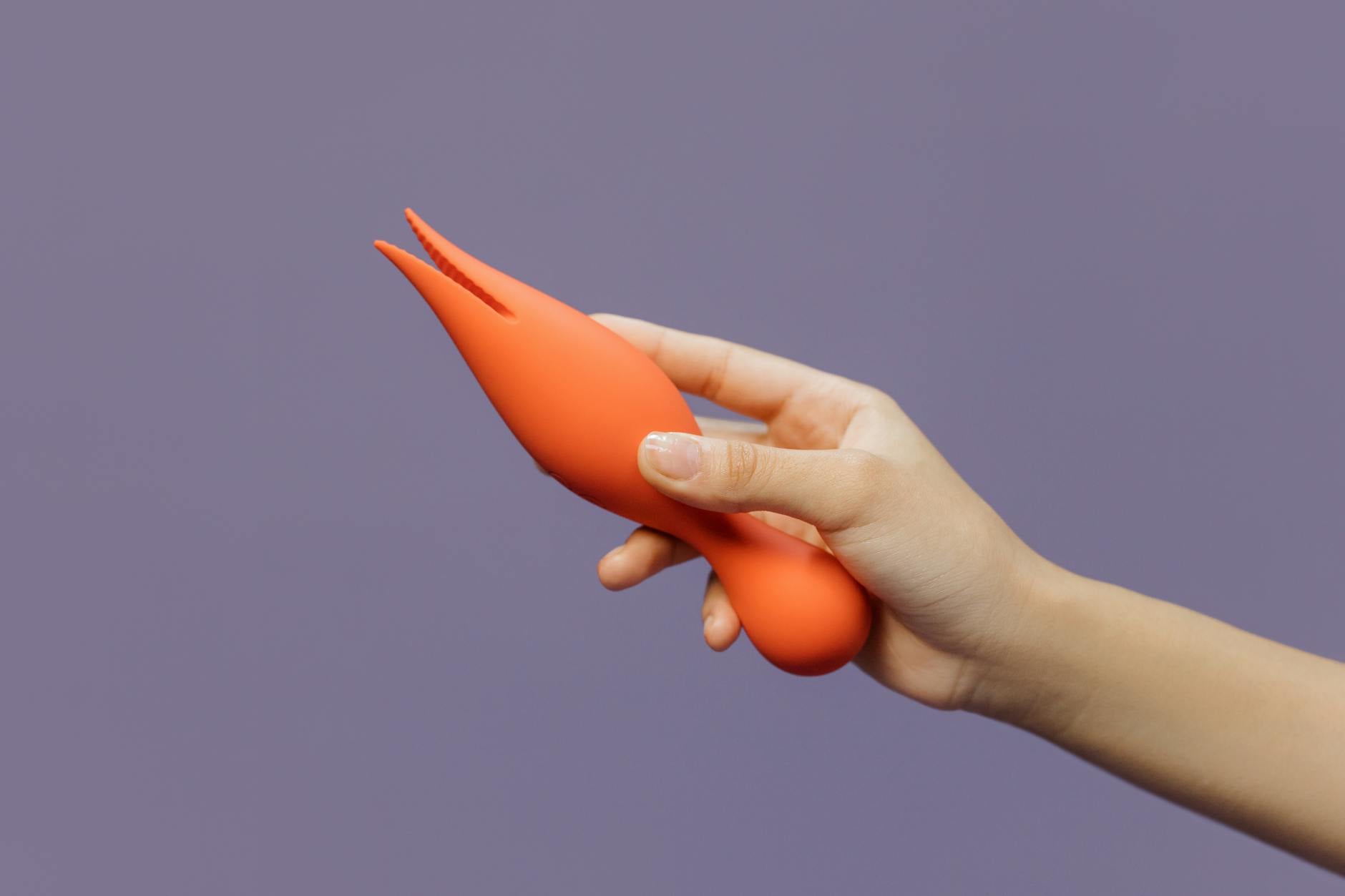
When life derails everything, including your sex drive
Let's be real. A major life disruption—a job loss, a cross-country move, a family crisis, financial stress, relationship conflict—doesn't just affect your calendar. It hijacks your nervous system, flattens your hormones, and vaporizes desire. You're not broken. You're in survival mode.
Most people expect arousal to snap back the moment the crisis ends. It doesn't work that way. Desire is one of the last things to return because your body is still running on fumes, your brain is still problem-solving at 3 a.m., and trust—in yourself, in your partner, in the world—is still rebuilding.
The good news: you can help it come back. And clitoral vibrators like those in the lemon vibrator collection are genuinely one of the most effective tools for reawakening sensation when everything else has gone quiet.
Why desire disappears first and comes back last
When you're in crisis mode, your body deprioritizes everything non-essential. That means no arousal signals, no lubrication readiness, no interest in pleasure. Cortisol (your stress hormone) stays elevated, which suppresses testosterone and dopamine—the two neurochemicals that fuel desire.
Your prefrontal cortex (the thinking part of your brain) is working overtime on solutions. Meanwhile, your limbic system (the feeling part) is locked down. Sex requires you to be present, to feel safe, and to quiet the mental chatter. None of that happens when you're in crisis.
Here's the kicker: even after the acute crisis passes, your nervous system stays vigilant. Old patterns take weeks or months to unwind. Your brain doesn't get the memo that it's safe to want things again.
The timeline you need to hear
If you're hoping desire roars back within a week or two of things settling, that's setting yourself up. Most people report meaningful arousal returning around 4-8 weeks after a major stressor has genuinely resolved (not just subsided—actually resolved). For some, it takes longer.
That doesn't mean you do nothing for 8 weeks. It means you stop expecting instant results and instead focus on signaling to your nervous system that it can start unwinding.
Using a lemon clitoral vibrator during this window isn't about forcing an orgasm. It's about reminding your body what pleasure feels like, rebuilding the neural pathway from stress directly to sensation.
Step one: separate pleasure from performance
The biggest mistake people make when rebuilding desire is treating pleasure like they're trying to fix something broken. They grab their lemon sucker vibrator with a sense of obligation: "I should want this. Why don't I? Let me try harder."
That effort—that performance mindset—is exactly what kills arousal.
Instead, approach this as exploration with zero expectations. You're not trying to have an orgasm. You're not trying to prove desire has returned. You're literally just noticing what happens when you touch yourself. Notice the sensation. Notice the ease or resistance in your body. That's the whole goal.
Set a time when you're genuinely alone and won't be interrupted. Not because you need to be "in the mood" (you're probably not). But because your nervous system needs proof that there's a window where you're safe and no one needs you for anything.
Step two: warm up slower than you think you need to
When you're coming out of a disruption, arousal doesn't respond to the usual timeline. Your body needs longer to shift gears. Most people try a lemon vibrator for 3-4 minutes and assume nothing's working. They're not wrong—but not because the tool is the problem. It's because they're not giving their nervous system time to register safety and ease.
Try this rhythm instead: spend 10-15 minutes just touching yourself without any vibration. Hands only. Slow. The goal is to let your system feel permission to be present. This is not foreplay. It's nervous system calibration.
Then introduce the vibrator at the lowest setting. Not because you're being cautious (though that's fine too). But because lower intensity often feels more interesting than higher intensity when you're rebuilding sensation. High intensity can feel like performance pressure. Low intensity feels like discovery.
Step three: use the right vibrator for a nervous system in repair
This is where a lemon vibrator helps specifically. The suction-style design of air-pulsation clitoral vibrators works with your nervous system rather than against it. Unlike traditional vibrators that require consistent direct pressure, the lemon's pattern creates a sensation of buildup and release that mirrors the way arousal actually works.
That means your body feels less like you're "using a vibrator" and more like you're experiencing natural arousal. Your nervous system can relax into it.
Start at pattern 1 or 2. You're not chasing sensation. You're just noticing what feels like interest, what feels neutral, and what feels like resistance. That information is valuable.
Step four: expect flatness—it's not permanent
You might use a lemon clitoral vibrator and feel almost nothing. Or feel a distant, disconnected sensation, like you're watching yourself rather than being in your body. This is normal and temporary when you're rebuilding desire after a major life disruption.
Sensation flatness happens because your nervous system is still in sympathetic dominance (fight-or-flight). You need to shift into parasympathetic (rest-and-digest). That shift doesn't happen on demand. It happens through repetition and safety signals.
Keep showing up, without judgment, for 2-3 weeks. Most people report sensation sharpening somewhere around week 3-4 of gentle, pressure-free exploration. Your nervous system eventually learns that this 15-minute window is a safe zone.
Step five: reconnect with your partner without agenda
If you have a partner, this phase is critical and often skipped. People feel like they "should" be ready to have sex again once they've had a couple of solo sessions. That's backwards.
Instead, spend time touching and being touched without sex as the goal. Skin-to-skin contact without expectation. This rebuilds safety in your relational nervous system—the part that's often most disrupted during couple stress.
If you want to introduce your partner to using a lemon vibrator with you, wait until you've rebuilt solo sensation first. Then approach it as shared exploration, not as a fix for flagging desire.
Step six: know when to get clinical support
If 8-10 weeks have passed, the major stressor is genuinely resolved, and you still feel completely flat—no interest, no physical response, no shift despite consistent solo practice—it's worth talking to a therapist or doctor.
Flat desire after crisis can sometimes point to depression, unresolved trauma from the disruption, or a relational pattern that needs addressing. A lemon vibrator can't fix those things. But a good therapist or couples counselor can.
The most important part no one talks about
Rebuild your life safety first. You cannot desire yourself or your partner if your nervous system is still running on fumes. That means sleep, food that feels nourishing, movement, and time with people who don't demand anything from you.
Then—only then—introduce pleasure back in.
Your desire will return. It always does. But it returns on its own timeline, not yours.
People also ask
How long does it typically take to rebuild sexual desire after a major life disruption?
Most people report meaningful arousal returning 4-8 weeks after the acute stressor has resolved. This timeline assumes the stressor is actually over, not just less intense. If the disruption is ongoing (like unresolved relationship conflict), desire stays suppressed. The nervous system won't shift until it has evidence that the threat is gone.
Can lemon vibrators help jumpstart desire that's been suppressed by stress?
Yes, but not by forcing arousal. Clitoral vibrators like those in the lemon collection work by creating a gentle, consistent sensation that helps your nervous system practice feeling safe. The suction-style pattern feels less aggressive than traditional vibration, which matters when your system is already sensitized by stress. Use them as a nervous system reset tool, not as a desire factory.
What if I use a lemon vibrator and feel nothing at all?
Flatness of sensation is expected in the early stages of rebuilding desire after disruption. Your nervous system is still in sympathetic dominance. Sensation usually sharpens around week 3-4 of consistent, pressure-free exploration. If flatness persists beyond 8-10 weeks, talk to a therapist or doctor—it may signal depression or unprocessed trauma.
Should I tell my partner I'm using vibrators to rebuild desire?
That depends on your relationship agreements around solo practice. If you're rebuilding desire together, transparency often helps. But start solo first. This phase is about your nervous system learning safety, not about performance or proving desire to anyone. Once sensation returns, you can invite your partner in.
Is it normal to feel guilt about not wanting sex during a crisis?
Completely normal and also completely unnecessary. Your body is prioritizing survival. Desire is a luxury signal that only emerges when your nervous system genuinely feels safe. You're not broken for losing interest. You're doing exactly what a healthy nervous system does.
Can I use vibrators too much while rebuilding desire?
You can, but it's not usually the problem. The problem is usually using them with performance pressure. If you find yourself reaching for a lemon vibrator multiple times a day trying to force arousal, that's a sign to step back and focus on nervous system healing first. Once desire starts returning naturally, frequency usually self-regulates.