Let's start with what's actually happening
Your orgasm feels slower to arrive, less intense, or weirdly different than it used to. You're not imagining it. Hormonal shifts. birth control changes, thyroid fluctuations, stress cortisol spikes, or even subtle shifts in estrogen and testosterone actually do rewire how your nervous system responds to touch. The good news: this isn't permanent, and it's wildly fixable.
Here's the thing nobody tells you straightforwardly. Your clitoris didn't stop being sensitive. Your brain didn't lose its capacity for pleasure. What changed is the speed and intensity of the signal getting from your skin to your nervous system. Think of it like a dimmer switch that got turned down. The light is still there. You just need a different approach to turn it back up.
Why hormones change your orgasm in the first place
Estrogen affects blood flow to genital tissue and the thickness of the vaginal lining. When estrogen dips. blood flow slows. When blood flow slows, arousal takes longer and orgasms can feel muted. Testosterone (yes, people with vulvas have it) directly influences desire and the speed of physical response. Birth control changes, perimenopause, postpartum hormones, even long-term stress all suppress testosterone production.
Your nervous system is also hyperresponsive to cortisol right now. High stress hormones create a kind of static in your pleasure pathways. Your body is literally in a lower gear, prioritizing survival over sensation.
But here's what I tell my clients: this is temporary and adjustable. The sensory nerve endings in your clitoris are still there. The neural pathways are still intact. You're not broken. You're just operating with a different signal-to-noise ratio.
Why lemon clitoral vibrators work better during hormonal shifts
Most vibrators use friction. They press and move side to side or up and down. When your hormones have dampened sensation, friction alone isn't enough. You need something that reaches deeper into the nerve network without requiring the same intensity from your body.
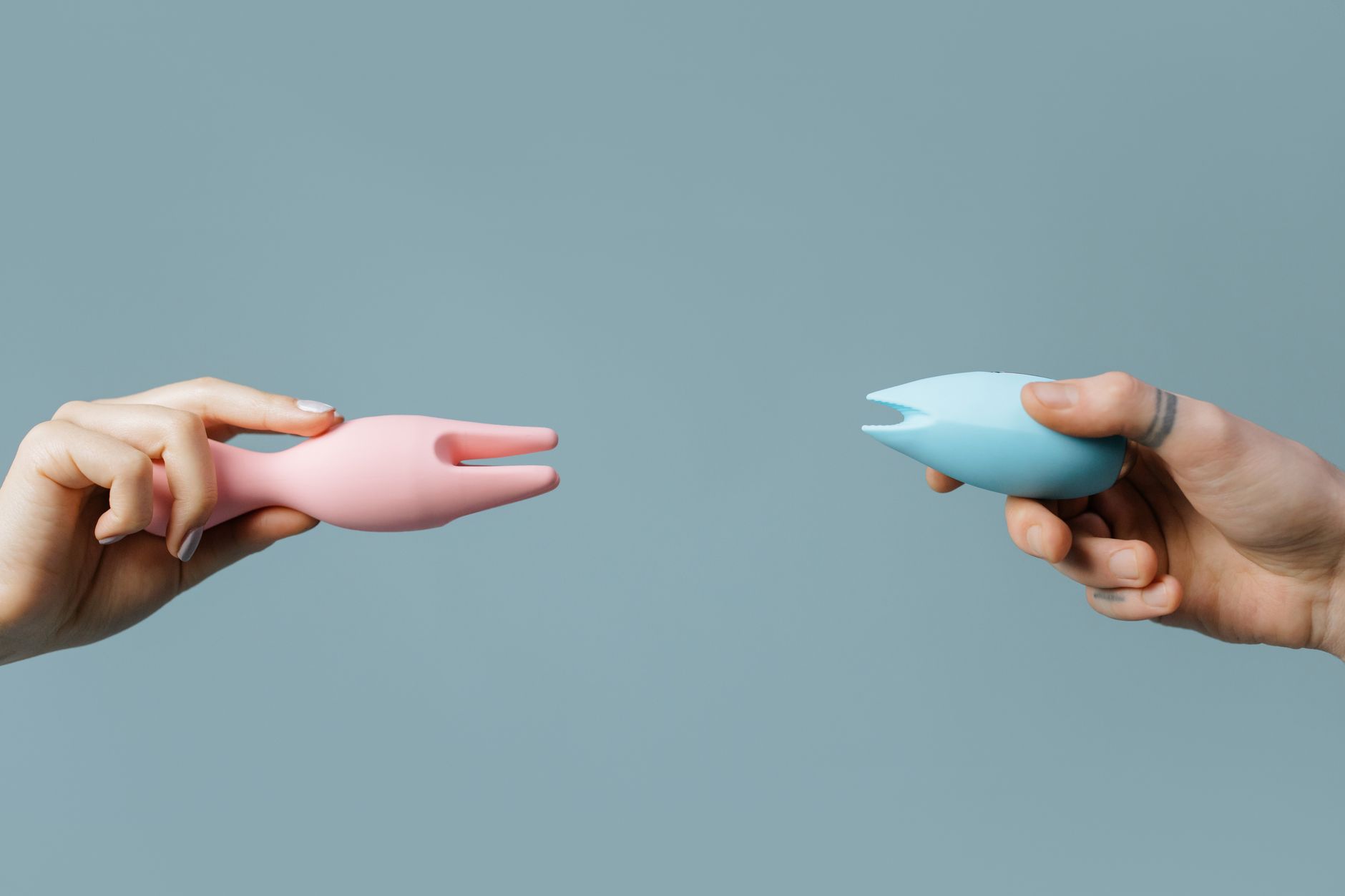
Lemon suction vibrators work differently. They use gentle, rhythmic suction that stimulates the entire clitoral complex. not just the surface. That deeper stimulation bypasses some of the dampened sensitivity at the skin level and activates the nerve clusters that are still firing at full strength. You're essentially talking directly to your nervous system in a language it's actually listening to right now.
The suction action also gradually increases blood flow to the area over the course of a few minutes. Where your body has been running on fumes, that increased circulation wakes things up. It's like priming a pump. You're not forcing a response. You're creating the conditions for your body to remember what it's capable of.
The setup that actually works
Timing matters more than you think. Your hormone fluctuations are real, but they're not consistent throughout the day or the month. If you're menstruating, progesterone is usually lower midcycle, which often means orgasms come easier around ovulation. Track this for two weeks. Notice when your body feels most responsive. Use lemon vibrators during those windows first. You're building evidence for your nervous system that pleasure is still available.
Lubrication is non-negotiable right now. If hormones have changed your natural lubrication, external lube isn't a sign something is wrong. It's a tool. Water-based lube works best with silicone toys and makes the suction sensation even more effective because there's zero friction resistance. Apply it generously. You're not overdoing it. You're optimizing.
Start with lower intensity settings. If you're used to vibrations at 7 out of 10, begin at 3. Your nervous system needs to relearn what pleasure feels like at each intensity level. Skipping straight to high intensity can feel overwhelming or even painful if your body has been dampened. Build up gradually over several sessions. This isn't foreplay. This is retraining.
Recalibrating your arousal timeline
You probably have a memory of how long your arousal usually takes. Throw that number out. Right now, budget double the time. If you used to get there in 10 minutes, plan for 20. This isn't failure. This is what your body needs.
Use the first 5 minutes just for warm-up. Touch your thighs, your inner arms, your neck. Your skin's sensitivity isn't uniform right now. Some areas might feel almost numb while others are weirdly heightened. Map this out. Then use your lemon vibrator on lower settings during this warm-up phase. You're not chasing an orgasm yet. You're gathering data about what your body is responsive to today.
Many people find that after about 15 minutes of consistent lower-intensity suction, something shifts. Blood flow increases. Arousal starts building. Then intensity feels good. Then it feels necessary. Then the orgasm, when it comes, might not be the earth-shattering moment you remember, but it's real and satisfying. Honor that. Your body will recalibrate further with repetition.
The mental piece that changes everything
Here's what I see in my practice constantly. The physical hormonal shift is real. But the mental narrative around it is often harder than the actual experience. You're telling yourself your pleasure is broken. That story makes your nervous system tighten further. That tightness literally slows blood flow and dims sensation even more. You've accidentally created a feedback loop.
One thing that helps: stop treating this like a problem to solve and start treating it like new information to work with. Your body didn't lose pleasure. It revealed that your old approach relied on hormones you don't have right now. This is actually useful. You're learning a second way to access pleasure. That redundancy is powerful.
When you're using your lemon vibrator, get curious instead of goal-oriented. Notice what patterns feel good right now. Notice what doesn't. Notice whether your orgasm comes from clitoral stimulation alone or whether you want something else added. Use this as a research phase, not a performance phase. Your nervous system knows the difference between curiosity and pressure, and it responds better to the first one.
When to bring a partner into this
If you have a partner, they need to understand what's actually happening. "My hormones changed how my orgasm works" is different from "I don't want to have sex with you." Many partners internalize slower arousal as rejection. It's not. It's logistics.
Show your partner the lemon vibrator. Explain the suction mechanism. Use it together if that feels comfortable. Many partners feel relief when they understand that the answer to dampened sensation isn't pressure or more intense friction. It's a different tool. Suddenly there's something to do together instead of a wall between you.
If solo exploration feels better right now, that's fine too. You're not obligated to perform responsiveness on someone else's timeline while your body is adjusting. Solo sessions help you figure out what works without pressure. You can integrate that knowledge back into partnered sex once you've got your own system down.
When hormones shift back
Your orgasm response will recalibrate as your hormones rebalance. If you're coming off hormonal birth control, give it three months. If you're in a temporary stress period, it usually shifts within weeks of the stressor lifting. If you're entering perimenopause, the timeline is longer and more variable, but it does shift.
The useful thing about learning to use a lemon suction vibrator during this phase is that you've got a tool that works regardless of your hormonal state. You can use it during the dampened phase and also during the heightened phase. It's versatile. Your body will tell you what intensity and duration feels right as things change.
Many people find that once they understand how their body responds to suction stimulation, they prefer lemon vibrators even after their hormones normalize. You've added to your pleasure toolkit, not temporarily fixed a problem. That's the real win.
People also ask
How long does it take for hormones to stop affecting my orgasm?
It depends on what shifted your hormones. If you stopped taking birth control, most people see changes within 3 to 4 months as your body rebalances its natural hormone production. If you're in perimenopause, hormonal fluctuations are ongoing, so your orgasm response may vary month to month. High stress can dampen orgasm for weeks or months, but usually resolves within 4 to 8 weeks after the stressor eases. If you're postpartum, 6 to 12 months is typical for sensation to normalize, though breastfeeding can extend that timeline. The key is that these are all temporary windows, not permanent states.
Can lemon clitoral vibrators help if my hormones have made me completely numb?
If you're experiencing total numbness or zero sensation, a lemon suction vibrator can help, but you should also see a doctor first. Complete numbness can sometimes indicate nerve damage, medication side effects, or a medical condition that needs attention. Once you've ruled out medical causes, clitoral vibrators that use suction instead of friction tend to work better for significant sensitivity loss because they stimulate deeper nerve structures. Start with very low settings and use consistently over two to three weeks. If you're still experiencing zero sensation, a more intensive option like combination therapy with a healthcare provider might help.
Does my orgasm intensity actually decrease with hormonal changes or does it just feel slower?
Both happen, and they're different things. Intensity often does decrease when blood flow is reduced, because orgasms are literally a series of muscular contractions, and those contractions are more powerful when tissues are engorged with blood. So yes, reduced hormones can mean less intense physical sensation. But slowness is sometimes separate. Your nervous system just needs more time to reach threshold. You might experience slower time-to-orgasm but then a completely intense orgasm once you get there. Using a lemon vibrator helps you reach that threshold without needing your body to do all the work. The intensity can actually return even if the timeline is longer.
Should I use a lemon vibrator every day if my hormones have dampened sensation?
Daily use is fine if it feels good, but more frequent use (3 to 4 times per week) is often more sustainable and equally effective. Too-frequent use can occasionally lead to temporary overstimulation, where you need more intensity to feel the same sensation. Think of it like muscle training. Consistent, moderate use works better than daily maximum effort. Also, taking a day or two off weekly lets your nervous system recalibrate and often makes the next session feel more responsive. Listen to your body. If daily exploration feels good, do it. If you want spacing, that works too.
Can hormonal changes affect one type of stimulation more than another?
Absolutely. Clitoral stimulation often feels very different than vaginal or penetrative stimulation when hormones shift, because they rely on different nerve networks. Clitoral sensation is often the first to go when hormones change (because it's more dependent on blood flow), and it's often the first to return. This is actually why suction-based toys like lemon vibrators often work better during hormonal transitions than traditional vibrators. They can stimulate sensation through suction, which is less dependent on blood flow than friction-based stimulation. Penetrative sensation might feel less affected, or it might feel totally different. This is another reason to explore solo first before partnered sex. You'll figure out what's actually responsive right now.
What if my partner's hormones are changing and I want to help?
The most helpful thing you can do is ask questions and listen without trying to fix. "How can I help this feel good?" is better than "Let me just do this thing that worked before." If they want to explore with a lemon vibrator together, be genuinely curious about it. Don't treat it like a replacement for you or a sign that something is wrong in your relationship. It's a tool. Many partners find that introducing a suction vibrator into partnered sex actually increases intimacy because it removes pressure. You're no longer trying to create sensation alone. You're working together with a tool designed to help. The focus shifts from performance to pleasure, and that's a good shift for any relationship.
The bottom line
Hormonal changes absolutely affect how your orgasm feels and when it arrives. That's real physiology, not a personal failing. Your body isn't broken. It's running on different neurochemistry, and that means your pleasure approach needs to adjust too. Lemon clitoral vibrators work well during these windows because they reach deeper nerve activation without requiring the same intensity from your already-dampened system. Start lower, go slower, and get genuinely curious about what your body needs right now. Your pleasure will adapt and often, once you've figured out this new pathway, you'll have access to sensations you didn't know were possible. That's the real gift of hormonal shifts. They force you to learn your body a second time. And the second time is usually better than the first.